
English


Views: 0 Author: Site Editor Publish Time: 2026-08-05 Origin: Site


The choice between raisin varieties is a structural and chemical decision that directly impacts the moisture, texture, and flavor balance of baked goods. Selecting the wrong dried fruit causes common baking failures like dried-out crumb structures, burnt surface fruit, clashing flavor profiles, and improper hydration in doughs. Many bakers are surprised to learn that both golden and dark raisins typically originate from the exact same grape variety—most commonly the Thompson Seedless. Their radical differences are entirely driven by post-harvest processing. We will evaluate the technical differences between golden raisins vs dark raisins, comparing their processing methods, moisture retention capabilities, and flavor profiles to help you make evidence-based formulation decisions.
Processing Dictates Texture: Dark raisins are sun-dried, leading to a chewier texture and caramelized flavor, while golden raisins are mechanically dried and treated with sulfur dioxide to retain moisture and a lighter color.
Moisture and Plumpness Variance: Golden raisins maintain a higher baseline moisture content and experience less physical shrinkage, making them larger, softer, and more plumper than their sun-dried counterparts.
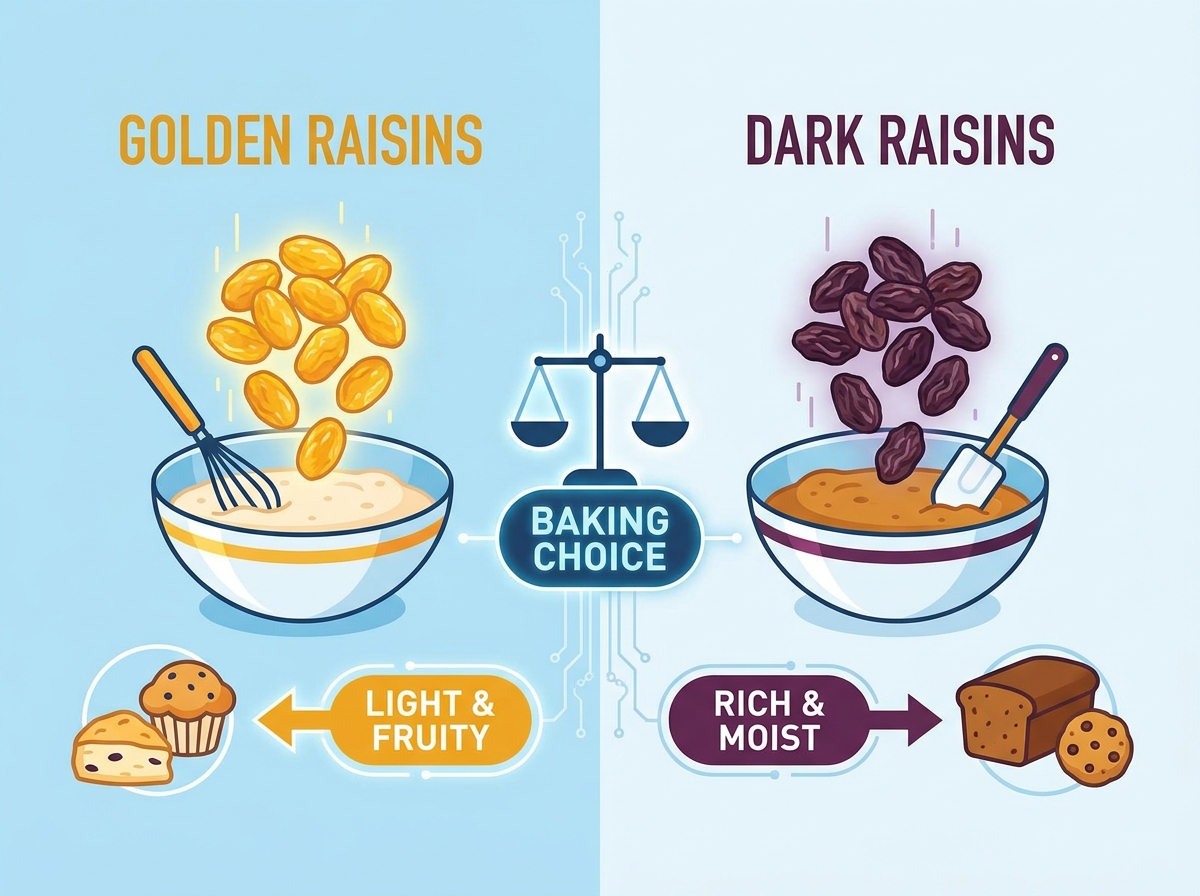
Flavor Profiles: Dark raisins deliver deep, earthy, molasses-like notes suited for hearty spices; golden raisins offer a sweeter, fruitier, and brighter profile ideal for delicate or light doughs.
Nutritional Preservation: Both varieties are antioxidant powerhouses, but the sulfur dioxide treatment in golden raisins preserves specific light-sensitive compounds, while sun-drying concentrates caramelized sugars and robust phenolics in dark raisins.
Implementation Requirement: Both varieties require proper maceration (plumping) and batter-suspension techniques to prevent moisture leaching and sinking during the bake.
Table of Contents
To evaluate dried fruit in baking, we must define the baseline success criteria. You need consistent moisture, predictable sugar content, and structural integrity under high heat. The raw ingredient baseline for both varieties is the Thompson Seedless grape. Process engineering diverges from this point to create two distinct baking ingredients with entirely different chemical behaviors in the oven.
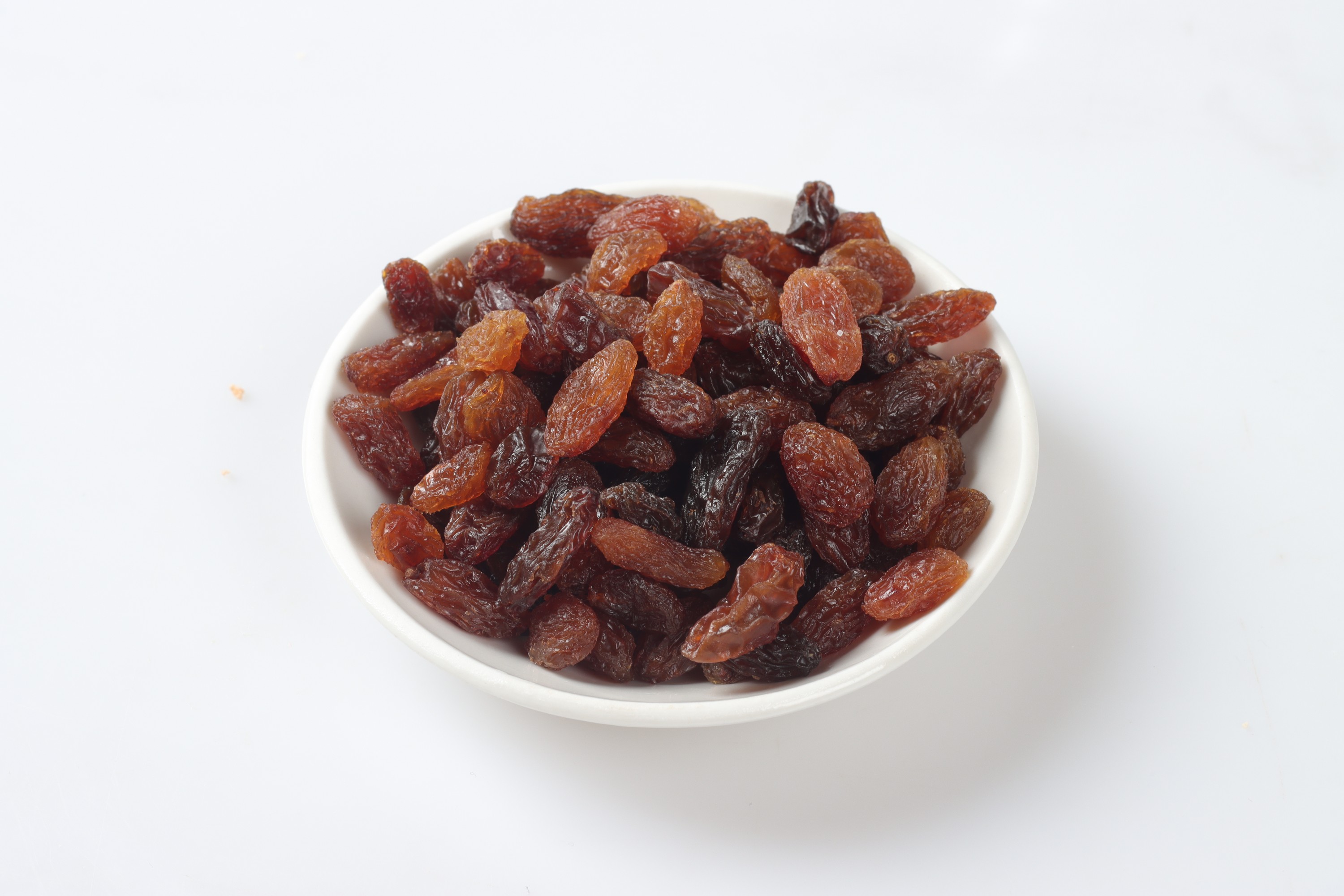
The traditional sun-drying process typically takes three to four weeks on paper trays in vineyards. During this time, the Maillard reaction and natural enzymatic browning occur due to prolonged sun exposure. This results in a deep brown or black color and a highly concentrated, caramelized sugar profile that bakers rely on for heavy doughs.
This prolonged sun exposure causes significant moisture loss and cellular collapse. The result is a denser, tougher skin and a shriveled, chewier texture. The process also concentrates natural antioxidants and phenolics, developing a robust flavor profile. When you add these to a batter without preparation, that tough skin acts as a barrier, preventing immediate moisture absorption but eventually pulling water from the surrounding crumb during the bake.
Golden raisins undergo a rapid mechanical dehydration process in temperature-controlled, gas-fired tunnel dryers. Before drying, they are treated with sulfur dioxide (SO2). This acts as an antioxidant and preservative to halt enzymatic browning, keeping the skin golden-yellow and preventing the deep caramelization seen in sun-dried variants.
Controlled, rapid drying prevents severe cell-wall collapse. This preserves a higher baseline moisture content, a larger physical size, and a plumper, softer structure. The sulfur dioxide treatment also preserves specific organic acids and vitamins, such as Vitamin C, that are otherwise degraded by direct sunlight. Because the cellular structure remains relatively intact, these raisins release and absorb moisture much more readily in a mixing bowl.
Understanding how the physical properties of these raisins translate to baking outcomes is essential for selecting the right ingredient for your recipe. You cannot simply swap them without adjusting your hydration calculations.
Golden raisins inherently possess higher moisture percentages than regular dark raisins. The drier skin and lower internal moisture of dark raisins can act as a sponge. If not pre-soaked, they pull moisture out of a delicate batter, leading to a dry crumb and a crumbly texture in the final product.
Conversely, the natural plumpness of golden raisins contributes to a moister final crumb in cakes, scones, and enriched breads. They integrate well without robbing the surrounding starches of water, maintaining the desired hydration levels in the dough. This makes them highly forgiving in recipes where liquid ratios are tight.
Feature | Dark Raisins | Golden Raisins |
|---|---|---|
Drying Method | Sun-dried (3-4 weeks) | Mechanically dried (tunnel dryers) |
Moisture Level | Low (requires heavy soaking) | Moderate to High (plump naturally) |
Skin Texture | Tough, chewy, collapsed cells | Soft, intact cellular structure |
Flavor Profile | Caramelized, earthy, molasses | Fruity, bright, acidic, sweet |
Dark raisins map well to traditional, heavy, or robust flavor profiles. They pair excellently with cinnamon, nutmeg, cloves, molasses, dark chocolate, oats, and whole grains. Their deep, earthy notes complement hearty spices and stand up to aggressive mixing methods.
Golden raisins are better suited for bright, acidic, or delicate profiles. They pair beautifully with citrus zests, vanilla, cardamom, saffron, almond, brioche, and white chocolate. Professional bakers often favor golden raisins for their cleaner, fruitier, sweeter, and more wine-like acidity, which elevates rather than overpowers a bake.
The visual outcome of using dark raisins in light batters provides a high contrast, traditional, rustic look. Golden raisins offer subtle integration and a premium appearance. They also avoid turning the surrounding crumb a muddy gray or blue, which can sometimes happen when dark raisins bleed their concentrated sugars into a high-hydration dough.

Selecting the right raisin type depends heavily on the specific dough or batter application. You must match the physical characteristics of the fruit to the structural demands of the recipe.
Golden raisins are often the industry standard for premium enriched doughs like panettone, challah, brioche, and hot cross buns. Their softer texture integrates better with delicate gluten networks without tearing them during the kneading process. Additionally, the golden hue blends seamlessly into yellow, egg-rich crumbs, creating a cohesive visual appeal.
Dark raisins offer structural benefits in dense, hearty applications like oatmeal raisin cookies, bran muffins, and hermits. In these bakes, a chewy, resilient texture and deep molasses flavor are desired features rather than flaws. The tough skin of the dark raisin holds up well to the heavy mechanical mixing required for thick cookie doughs.
When considering maceration capacities—the ability to absorb rum, brandy, sherry, or simple syrups—golden raisins absorb liquids more rapidly due to their less-damaged cellular structure. This contributes significantly to the overall moisture retention of aging cakes, making them ideal for fruitcakes and long-shelf-life bakes where alcohol acts as a preservative.
Using dried fruit in baking comes with inherent risks, but proper techniques can mitigate these issues. You must control the variables of hydration, suspension, and heat exposure.
Dried fruit tends to sink in high-hydration batters due to gravity and the density of the fruit. Mitigation strategies include tossing raisins in a portion of the recipe's flour, adjusting batter viscosity, or utilizing a two-stage folding method to ensure even distribution.
Drain soaked raisins completely and pat them dry with a clean towel.
Toss the dried fruit in one tablespoon of the recipe's dry flour mixture.
Fold the coated fruit into the batter at the very end of the mixing process.
Bake immediately to prevent the fruit from settling at the bottom of the pan.
To prevent raisins from dehydrating the surrounding dough, it is necessary to plump or soak them prior to mixing. This is especially true for drier dark raisins. Soaking in hot water, fruit juice, or alcohol ensures they are fully hydrated before entering the batter. If you skip this step, the raisins will aggressively pull water from your flour, resulting in a crumbly, stale texture.
Both varieties have a high sugar content, posing a risk of acrid, bitter, burnt flavors if exposed on the crust of breads or cookies during baking. Techniques for encasing the fruit within the dough during shaping or gently pressing exposed raisins deeper into the batter can prevent surface burning. Always inspect the surface of your shaped loaves before they enter the oven.
Commercial bakers must consider cost, yield, and compliance when selecting raisin varieties. The choice impacts not just the recipe, but the operational logistics of the bakery.
There is typically a price premium associated with golden raisins due to mechanical processing energy costs and chemical treatments. Commercial production requires careful consideration of bulk purchasing, storage life, and weight-to-volume yield differences between the two varieties. Golden raisins often yield a higher volume per pound because they retain more moisture and physical plumpness.
Sulfur dioxide, used in golden raisins, is a recognized allergen and must be flagged for sulfite-sensitive populations, particularly asthmatics. Clear allergen labeling is necessary when using golden raisins in commercial baking. In situations requiring clean label or organic certifications, dark raisins, which are naturally processed and sulfite-free, are often required by regulatory bodies.
Conduct a split-batch test using both raisin varieties in your base recipe to evaluate moisture retention and flavor compatibility.
Implement a mandatory 15-minute hot liquid soaking protocol for all dark raisins before incorporating them into delicate batters.
Update your bakery's allergen labeling to clearly declare sulfites if you switch to golden raisins for your enriched doughs.
Train your shaping team to manually press exposed raisins into the center of dough portions to prevent surface burning during high-heat bakes.
With dedicated facilities for Turpan dried raisins, bakery ingredients, and professional food machinery, Baker's Kingdom provides integrated support for bakery businesses, from ingredient selection and product development to equipment and whole-plant planning. Its combination of production resources and baking expertise helps commercial customers improve product consistency, production efficiency, and long-term operational performance.
A: Yes, they can be substituted at a 1:1 ratio by weight. However, keep in mind that golden raisins will yield a softer, plumper texture and fruitier flavor, while dark raisins will add more chewiness and a deeper, caramelized sweetness to the final product.
A: They are dried mechanically in temperature-controlled environments rather than under the sun. This rapid drying, paired with a sulfur dioxide treatment, prevents the severe moisture loss, cellular collapse, and skin toughening seen in traditional sun-dried dark raisins.
A: It is highly recommended, especially for dark raisins. Soaking or plumping them in hot liquid prevents them from absorbing moisture from your batter, which can lead to a dry finished product and a crumbly texture.
A: Generally, no. Because they are treated with sulfur dioxide to maintain their color, they contain sulfites, which must be declared as an allergen on food labels. Dark raisins are typically sulfite-free and fit clean label requirements.
A: Golden raisins are often preferred for fruitcakes because their less-damaged cellular structure allows them to absorb macerating liquids like rum or brandy more rapidly, contributing to better moisture retention during aging.


