
English


Views: 0 Author: Site Editor Publish Time: 2026-08-05 Origin: Site


Baking a fruitcake, pound cake, or sponge often reveals a frustrating mechanical failure when you slice into the finished product. The density differential between heavy dried fruits and aerated batters pulls inclusions downward during the baking process. This physical reaction results in bottom-heavy bakes where all the fruit congregates at the base of the pan. Practitioners constantly face the challenge of how to prevent raisins sinking in cake. Uneven distribution compromises slice integrity, alters moisture zones, and ruins the aesthetic presentation of the crumb. We must move beyond anecdotal home-baking advice and evaluate proven, culinary-science-backed methodologies to stabilize batter. Proper technique ensures inclusions remain perfectly suspended from the top crust to the bottom base. Understanding the mechanics of batter viscosity, specific gravity, and surface friction will completely transform your baking results and yield professional-level consistency.
Density Modification is Critical: Soaking or plumping raisins alters their specific gravity, bringing their density closer to that of the surrounding batter.
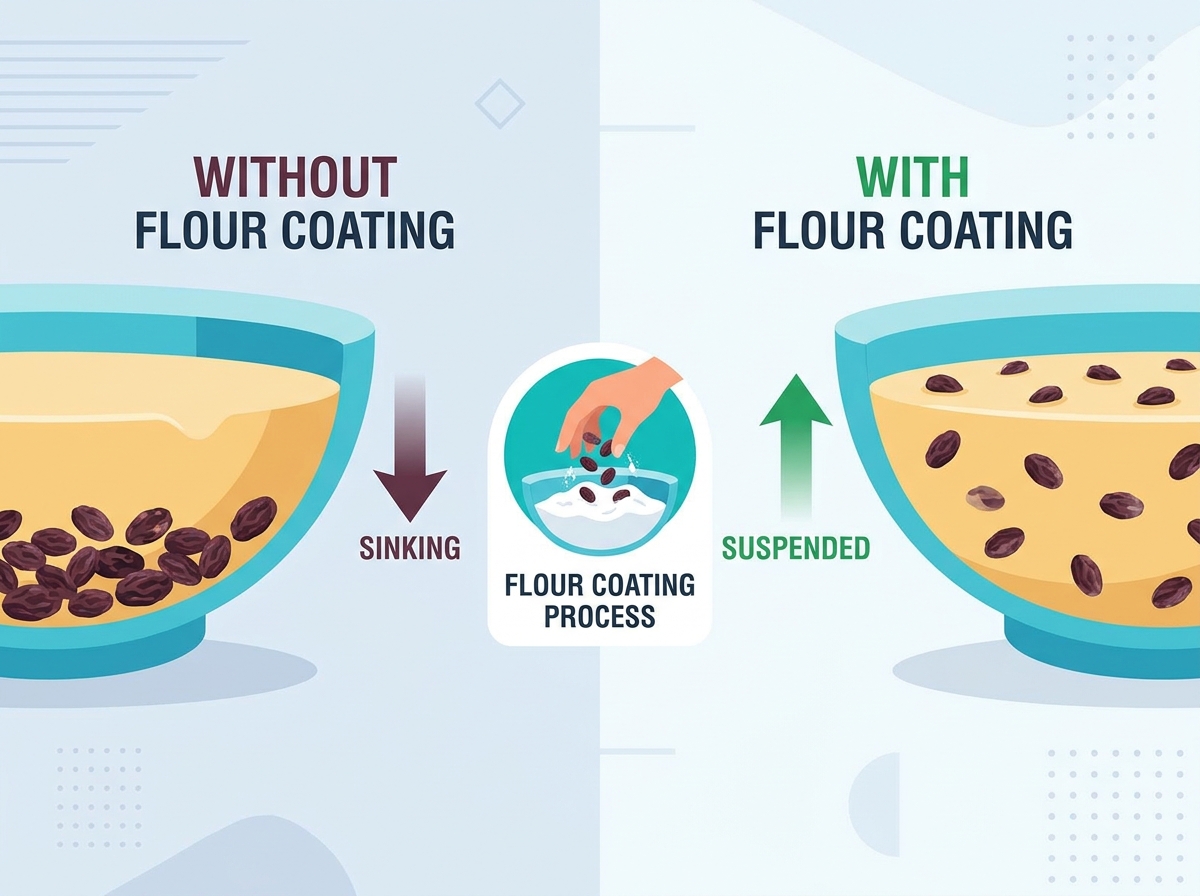
Surface Friction Dictates Suspension: Applying a light flour or starch coating creates a high-friction surface that adheres to the batter's gluten network, delaying the sinking process during the initial bake phase.
Batter Viscosity is the Baseline: No surface treatment will save inclusions in a hyper-hydrated, low-viscosity batter; structural support must be evaluated at the recipe level.
Surface Barrier Interference: Commercial raisins are often coated in processing oils (e.g., sunflower oil) that repel both batter and flour coatings, requiring pre-treatment steps.
Implementation Trade-offs: Interventions like excess flour or excess liquid from soaking carry risks of altering the recipe's hydration baseline and crumb structure.
Table of Contents
The success criteria for inclusion distribution is straightforward. You want a uniform matrix from the top crust to the bottom base. Raisins possess a higher specific gravity than aerated sponge or pound cake batter. This density disparity is the root cause of sinking. Heat application during baking temporarily decreases batter viscosity. This happens right before starch gelatinization occurs. This brief window is when heavy inclusions drop through the thinning batter structure. When the butter or shortening melts in the oven, the batter becomes highly fluid. If the batter lacks the structural integrity to hold the fruit in place during this fluid phase, gravity takes over. The fruit falls to the bottom before the flour and eggs can set the crumb.
Understanding the timeline of a baking cake helps clarify this issue. In the first twenty minutes of baking, the internal temperature of the batter rises rapidly. Leavening agents activate, creating gas bubbles that push the batter upward. Simultaneously, solid fats melt into liquid oils. This combination of gas expansion and fat melting creates a highly unstable environment for dense objects. The batter reaches its lowest viscosity point just before the starches begin to absorb water and swell. If you want to prevent raisins sinking in cake, you must bridge this gap. You need a strategy that holds the fruit in place until the crumb structure solidifies.
The mass-to-surface-area ratio heavily influences suspension. Larger jumbo raisins sink much faster than smaller currants or chopped pieces. A large raisin has a high mass relative to its surface area, meaning it exerts more downward force against the batter. Commercial processing adds another layer of difficulty. Manufacturers often apply hydrophobic oil coatings to dried fruits to prevent clumping in the packaging. This oil prevents proper batter adhesion. Raisin behavior mirrors other heavy inclusions like dried cranberries or glacé cherries. Without intervention, these dense items will always seek the bottom of the pan.
Let us examine the surface of a standard commercial raisin. The skin is naturally smooth and slightly waxy. When coated in sunflower or vegetable oil by the manufacturer, it becomes completely hydrophobic. Cake batter, which contains a significant amount of water from eggs and milk, cannot grip this oily surface. The batter simply slides off the fruit. This lack of friction accelerates the sinking process. You must alter the physical characteristics of the raisin's surface to create friction. A rough, dry surface will catch on the gluten strands and starch molecules in the batter, acting like a microscopic parachute.
Aggressive chemical leavening creates rapid expansion. High amounts of baking powder or baking soda form large air pockets. These pockets fail to support dense inclusions during the oven spring. Heavy batters like pound cake offer inherent structural support. Light, highly aerated batters like genoise or chiffon lack this density. They require meticulous inclusion management to prevent structural collapse. When a large gas bubble forms underneath a raisin, the bubble eventually bursts or shifts, causing the raisin to drop further down the matrix.
The mixing method also dictates aeration levels. The creaming method, where butter and sugar are beaten together until light and fluffy, incorporates millions of tiny air cells. These cells expand in the oven. If you over-cream the butter, the batter becomes too airy and weak to hold heavy fruit. Conversely, the reverse creaming method, where flour is mixed with fat before adding liquids, creates a tighter, more velvety crumb. This tighter crumb structure provides superior support for inclusions. Adjusting your mixing technique can drastically improve your success rate.
You must remove commercial processing oils before mixing. A rapid warm-water rinse is highly effective. Clean, oil-free skin vastly improves the adhesion of subsequent starch coatings. Skip this step, and your flour coating will slide right off the fruit during baking. The de-oiling process is simple but mandatory for consistent results.
Place the measured raisins in a fine-mesh strainer.
Run warm water (around 100°F) over the fruit for exactly 30 seconds.
Agitate the fruit with your hands to ensure all surfaces are washed.
Spread the rinsed fruit onto a baking sheet lined with paper towels.
Pat the fruit completely dry to remove all surface moisture.
Tossing raisins in a portion of the recipe's dry ingredients creates surface friction. The starch absorbs residual surface moisture on the fruit. This forms a textured layer that grips the batter's structural network. It acts as a physical brake against gravity. You must use flour reserved from the recipe's total measurement, not extra flour, to avoid drying out the cake.
The mechanics of this technique rely on starch gelatinization. When the flour-coated raisin hits the wet batter, the flour layer hydrates slightly. As the cake bakes, this hydrated flour layer gelatinizes, essentially gluing the raisin to the surrounding crumb. This bond is usually strong enough to hold the fruit in place during the critical low-viscosity phase of baking. However, this technique only works if the batter has a baseline level of thickness. Thin, watery batters will simply wash the flour coating away.
Macerating or soaking raisins in water or juice modifies their density. This process increases the physical size and volume of the raisin. It lowers the overall density, bringing it closer to the batter's specific gravity. It also prevents the fruit from leaching moisture from the surrounding crumb during baking. A dry raisin acts like a sponge, pulling water out of the cake and creating dry pockets.
To execute this properly, you must control the temperature and time. Boiling water works fastest, plumping the fruit in about 15 minutes. Cold liquids, like rum or fruit juice, require several hours or even overnight soaking to achieve the same effect. Once plumped, the fruit must be drained meticulously. Any free liquid introduced into the batter will alter the hydration ratio and potentially cause the cake to collapse.
Mechanical adjustment is sometimes necessary. Chopping larger raisins or sultanas decreases their individual mass. Smaller pieces increase the total surface area relative to weight. This maximizes suspension stability across the entire cake. It also provides a more even distribution of flavor in every bite.
When chopping sticky dried fruit, toss the knife blade in a little flour to prevent sticking. You can chop them manually or pulse them briefly in a food processor. Aim for pieces that are roughly the size of a standard chocolate chip. This size offers the perfect balance of flavor impact and suspension capability. Mass reduction is particularly effective in highly fluid batters like carrot cake or zucchini bread.
Chilling the batter prior to baking increases initial viscosity. This delays the melting of fats in the oven. You can also make recipe-level adjustments. Reducing liquid ratios slightly creates a stiffer suspension matrix capable of holding heavy fruit. A thicker batter provides immediate physical resistance against sinking.
Resting the batter in the refrigerator for 30 to 60 minutes allows the flour to fully hydrate and the gluten to relax. The butter or shortening solidifies, making the batter stiff. When this cold batter enters the oven, it takes longer for the internal temperature to reach the melting point of the fats. This delay gives the leavening agents and starches a head start, setting the structure before the fruit has a chance to drop.
This method boasts a high success rate in medium-density batters. It creates a reliable physical barrier. It is highly scalable for commercial batches and requires minimal prep time. However, it is ineffective in highly fluid batters. In thin carrot cake or oil-based batters, the flour coating simply dissolves into the surrounding liquid, leaving the fruit unprotected.
For optimal results, use a fine-mesh sieve to shake off any excess flour after coating the fruit. You only want a microscopic layer of starch adhering to the skin. Clumps of raw flour will create unpleasant dry spots in the finished cake. This method is best suited for pound cakes, standard butter cakes, and dense muffins.
Soaking is excellent for crumb moisture retention. It significantly reduces the density disparity between the fruit and the batter. It requires advanced staging and precise draining. You must avoid introducing excess free water into the mix. There is a risk of flavor dilution if soaked in plain water, so using complementary juices or liquors is recommended.
The draining process is the most critical failure point of this method. After soaking, the fruit must sit in a strainer for at least 10 minutes. You should then press the fruit gently with paper towels to remove surface liquid. If the fruit is dripping wet when added to the batter, it will create soggy zones in the baked cake and interfere with the leavening process.
This involves pouring a base layer of plain batter first. You then add the raisin-folded batter on top. It offers a physical barrier approach. However, it has poor scalability for high-volume production due to increased labor. It can also create distinct stratification lines in the final crumb structure.
To execute staged layering, fill the bottom quarter of your baking pan with batter that contains no inclusions. Smooth it out into an even layer. Then, gently spoon the fruit-heavy batter over the top. As the cake bakes, the heavy fruit will sink through the top layer but will be stopped by the dense bottom layer, resulting in an even distribution in the final slice. This is highly effective for loaf cakes but impractical for large sheet cakes.
Method | Primary Mechanism | Best For | Key Limitation |
|---|---|---|---|
Flour Dusting | Surface Friction | Pound Cakes, Dense Batters | Fails in highly fluid batters |
Hydration/Plumping | Density Modification | Fruitcakes, Sponges | Requires precise draining |
Staged Layering | Physical Barrier | Small batch baking | Labor intensive, poor scalability |
Mass Reduction | Surface Area Optimization | Muffins, Carrot Cakes | Alters visual presentation |
Batter Chilling | Viscosity Delay | Butter-based cakes | Alters baking time |
Adding extra flour for coating carries significant risks. It can lead to a dry, dense crumb. The mitigation strategy is simple. Always subtract the coating flour weight from the total dry ingredient allocation of the recipe. If your recipe calls for 300 grams of flour, use 280 grams for the batter and reserve 20 grams for coating the fruit.
Failing to account for this extra flour throws off the liquid-to-dry ratio. Baking is a precise chemical formula. Even a 5% increase in total flour can result in a tough, unpalatable texture. Precision weighing using a digital scale is mandatory when adjusting these ratios.
Overmixing is a serious risk when folding in coated or soaked raisins. You must establish strict mixing protocols. Fold inclusions at the exact end of the mixing cycle. Use a gentle, bottom-up motion to maintain crumb tenderness. Every time you stir the batter, you develop gluten strands.
If you use a stand mixer to fold in the fruit, you will almost certainly overwork the batter. Always fold inclusions by hand using a large silicone spatula. Scrape the bottom of the bowl and fold the batter over the fruit. Stop mixing the exact second the fruit is evenly dispersed. Further mixing will result in a rubbery cake.
Improperly drained soaked raisins introduce excess moisture. This free water can alter the pH if using acidic juices. Shifts in pH directly impact chemical leavening reactions, potentially causing the cake to collapse. Baking soda requires a specific acid balance to activate properly.
If you soak raisins in orange juice or buttermilk, the residual acid on the fruit will react prematurely with the baking soda in the batter. This neutralizes the leavening power before the cake even enters the oven. To prevent this, rinse acid-soaked fruit briefly in water and dry thoroughly before adding to the batter.
The most reliable approach to prevent raisins sinking in cake is a hybrid method. Use brief warm hydration to de-oil and equalize density. Drain thoroughly, then apply a light coating using reserved flour. For thick batters, flour dusting alone is sufficient. Light batters require the full wash, hydration, and dusting protocol. Fluid batters demand chopping inclusions and adjusting batter viscosity.
Baker's Kingdom combines dried-raisin production with bakery ingredient processing, baking equipment manufacturing, and one-stop solutions for commercial baking operations. Supported by its Turpan raisin factory, Shanghai ingredient and equipment facilities, and baking technical-service network, the company helps bakeries improve ingredient consistency, production efficiency, and finished-product quality.
Conduct a small-batch split test using the hybrid method against your current baseline.
Measure crumb structure and inclusion distribution before scaling to production volumes.
Standardize your draining process to prevent excess moisture transfer.
Reserve exactly 5% of your recipe's total flour specifically for coating inclusions.
A: Yes, coating raisins in flour creates surface friction that helps them adhere to the batter's gluten network, though it must be paired with a batter of sufficient viscosity to be fully effective.
A: Soaking in hot water is more efficient as it rapidly permeates the raisin's skin, plumping the fruit and lowering its density in 10-15 minutes, whereas cold water requires extended soaking times.
A: Raisins will still sink if the cake batter is too thin (high hydration) or over-aerated. The flour coating cannot compensate for a batter that lacks the structural integrity to suspend heavy inclusions.
A: Yes. Larger, heavier raisins have a higher mass-to-surface-area ratio, making them more prone to sinking. Chopping or halving large raisins reduces their individual weight, dramatically improving their suspension rate.
A: Rinse the raisins in warm water for 30 seconds to strip away the hydrophobic oil coating, pat them dry thoroughly with a paper towel, and then apply your flour coating. This ensures the flour adheres directly to the raisin skin.
A: Yes, cornstarch can be used and is highly effective at absorbing surface moisture to create friction, making it a viable alternative for gluten-free baking applications.
A: Chilling the batter rests the gluten and solidifies the fats, temporarily increasing viscosity. This delays the thinning of the batter in the oven, giving the cake structure more time to set around the raisins.


