
English


Views: 0 Author: Site Editor Publish Time: 2026-09-20 Origin: Site


Bakers frequently encounter a frustrating structural failure where dense inclusions settle at the base of the pan. This settling results in an uneven texture, a gummy bottom layer, and compromised cake integrity. The core problem lies in basic physics. The specific gravity and density of Raisins vastly exceed the viscosity of standard cake batters. This density mismatch becomes especially problematic during the critical heat-induced thinning phase in the oven. As the batter warms, it temporarily thins out, allowing heavy objects to drop before the crumb sets.
Understanding how to prevent raisins sinking in cake establishes a foundational technique that applies equally to other problematic inclusions, such as dried cherries, currants, blueberries, and chocolate chips. We will systematically evaluate common culinary interventions—ranging from surface friction modifiers to density equalization—to establish the most reliable method for maintaining suspension across various batter types.
Viscosity is the Primary Variable: The baseline thickness of the cake batter dictates which suspension method will be effective; thin batters require different interventions than dense batters.
The Flour Coating Caveat: While widely recommended, dusting raisins in flour relies on surface friction and only works reliably if the batter has sufficient structural integrity to support the coated fruit.
Density Equalization: Soaking raisins alters their specific gravity, making them closer in density to the surrounding batter and reducing the gravitational pull during baking.
The Synergistic Approach: The highest success rate comes from combining methods—specifically, soaking to plump the fruit, draining meticulously, and then applying a light flour coating to maximize both density equalization and surface friction.
Strategic Layering: Utilizing a base layer of plain batter before incorporating the raisin-mixed batter acts as a physical fail-safe against bottom-sinking.
Table of Contents
Raisins are denser and heavier than cake batter, so they naturally tend to sink. Cake batter contains air from mixing, whipped eggs, or leavening agents, making it lighter. To keep raisins evenly distributed, the batter needs to be thick enough to support them until the cake begins to set. If the batter is too thin, the raisins are more likely to sink to the bottom during baking.
Ingredient / Component | Approximate Specific Gravity | Physical State in Raw Batter |
|---|---|---|
Standard Pound Cake Batter | 0.85 - 0.95 | Thick, aerated emulsion |
Sponge Cake Batter | 0.40 - 0.60 | Highly fragile foam |
Dried Grapes / Currants | 1.30 - 1.45 | Dense, low-moisture solid |
Fresh Blueberries | 1.00 - 1.05 | High-moisture solid |
Fruit usually sinks during baking rather than mixing. As the batter heats, butter melts and sugar dissolves, making the batter temporarily thinner. During this stage, heavy raisins may sink before the cake begins to set. This is why maintaining a suitable batter thickness and properly preparing the raisins are important for keeping the fruit evenly distributed throughout the cake.
The most common advice given to bakers is to toss inclusions in a small amount of flour. The mechanism relies on creating a rough, high-friction surface area around the fruit. When you coat a smooth object in dry powder, that powder absorbs localized moisture from the surrounding batter. This creates a tiny, viscous micro-barrier that grips the batter matrix, increasing friction and slowing the rate of descent.
Surface preparation is mandatory for this to work. Commercial processing often coats dried fruit in a light layer of vegetable oil or sugary syrup to prevent clumping in the bag. This oil repels flour. If you do not remove it, the flour turns into a slippery paste rather than a friction barrier. You must execute a specific washing protocol to ensure the friction barrier adheres properly.
Place the dried fruit in a fine-mesh strainer.
Submerge the strainer in a bowl of hot water (around 120°F) for exactly 60 seconds to melt the commercial oil coating.
Agitate the fruit vigorously with your hands to loosen the syrup and oil.
Rinse under cold running water to wash away the residue.
Spread the washed fruit onto a double layer of paper towels and pat completely dry.
Toss the dry fruit in a small portion of the recipe's measured flour until evenly coated.
The primary limitation of this method is batter hydration. The flour coating frequently fails in high-hydration or highly aerated batters, such as sponges or thin muffin batters. In these environments, the batter is simply too thin during the heat-thinning phase. Surface friction alone cannot counteract gravity without a moderately thick batter to grip onto.
Soaking raisins before baking can help prevent them from sinking. Place the raisins in hot water, fruit juice, or another suitable liquid for 15–20 minutes to make them softer and slightly less dense. After soaking, drain them thoroughly and pat them dry with paper towels. Removing excess moisture is important because wet raisins can create soggy areas or holes in the cake. Once dry, the raisins can be added directly to the batter or lightly coated with flour for better distribution.
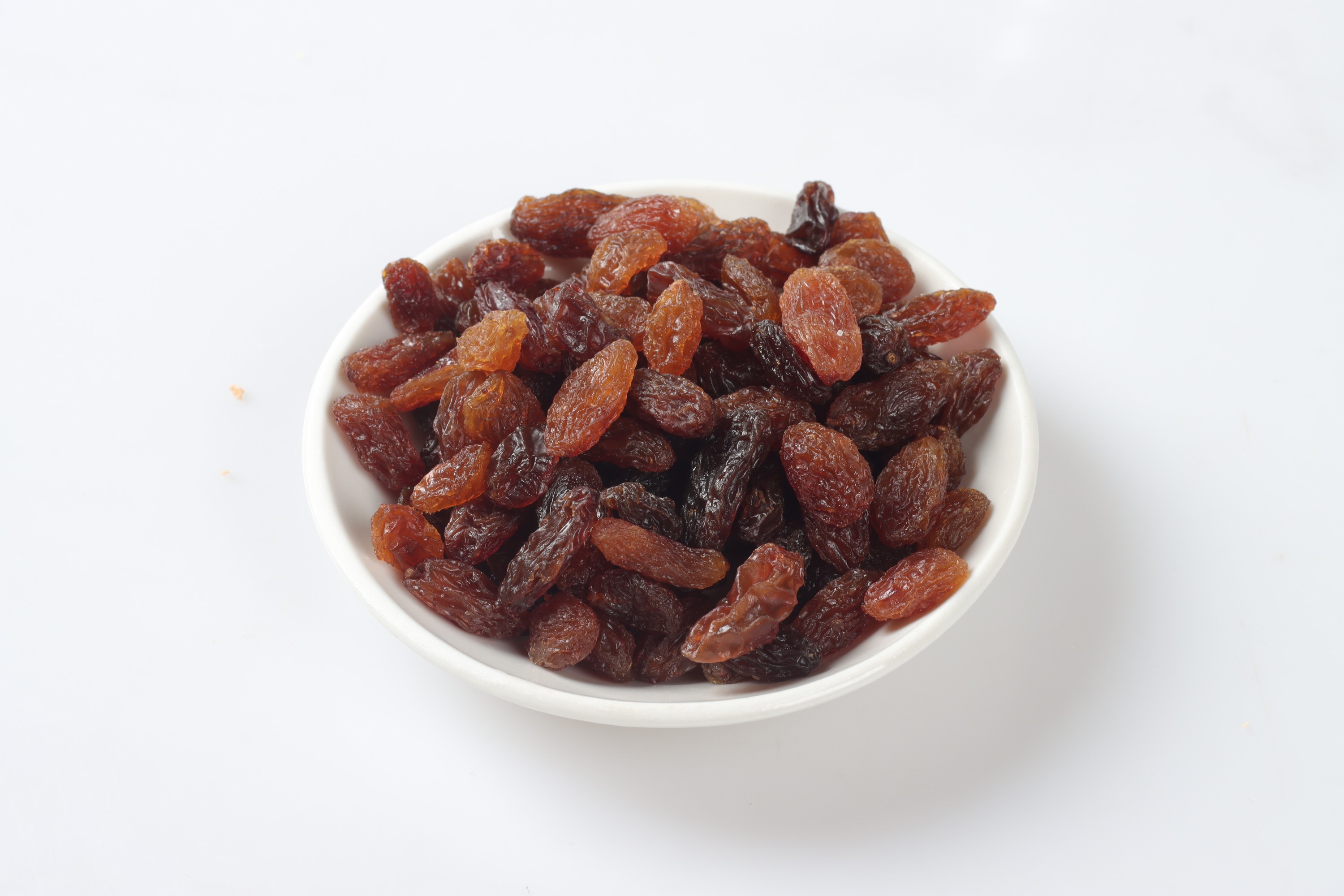
Relying on a single variable often leads to inconsistent results. The synergistic approach combines density equalization with surface friction. First, you soak the fruit to expand its volume and lower its density. Second, you drain it completely and pat it dry to remove surface moisture. Finally, you toss the plumped fruit in a light dusting of flour to create a friction barrier.
This hybrid method addresses both the heavy weight of the fruit and its physical grip on the batter matrix. By attacking the problem from two different physical angles, you achieve the highest reliability across varying recipe types. It provides a fail-safe. If the batter gets too thin for the friction barrier to hold, the lowered density of the plumped fruit keeps it suspended anyway. Conversely, if the plumping did not lower the density enough, the flour friction provides the extra grip needed to hold the fruit in place.
Temperature control manipulates the heat-thinning phase directly. The mechanism involves chilling the fully mixed batter prior to baking. By starting with a colder batter, you delay the melting of the fats and the dissolving of the sugars. The batter stays thicker for a longer period in the oven.
This delay allows the outer edges of the cake to heat up and begin setting their structural network before the internal batter thins out enough to let the fruit drop. Resting the batter in the refrigerator for 30 to 60 minutes drops the internal temperature significantly. While effective for scalability and consistency, this method has trade-offs. Chilling the batter can alter the final rise, as chemical leaveners like baking powder may activate prematurely or lose their potency. It also requires adjustments to the total baking time, often adding 5 to 10 minutes to reach the proper internal temperature of 200°F to 210°F.
When chemical or friction-based methods fall short, physical barriers provide the ultimate security. The layering mechanism involves pouring a shallow layer of un-fruited, plain batter directly into the bottom of the prepared pan. You then fold your inclusions into the remaining batter and gently pour it over the base layer.
The bottom layer acts as a physical buffer. Even if the fruit begins to sink during the heat-thinning phase, it hits the plain batter layer instead of the metal pan. By the time the fruit travels through the top layer, the bottom layer has already begun to set and coagulate, trapping the fruit in the lower-middle section of the cake. This is highly effective for very thin batters. The base layer should be exactly 1/4 to 1/2 inch thick to provide adequate protection without leaving a massive gap of plain cake at the bottom of the slice.
Sponge cakes and chiffons rely entirely on the mechanical aeration of whipped eggs. The air matrix is incredibly fragile. The batter contains very little fat and high amounts of liquid, resulting in exceptionally low viscosity during baking. Heavy inclusions will tear straight through the air bubbles and hit the bottom immediately.
For these delicate cakes, you must aggressively reduce the mass of the inclusions. The recommended approach is a combination technique. First, finely chop the fruit to reduce the physical weight of each individual piece. Second, apply a light flour dusting to maximize friction on those smaller pieces. Finally, utilize the physical layering technique. Pour a quarter-inch of plain sponge batter into the pan before adding the fruited batter. This three-step compliance ensures the fragile air matrix remains intact and the fruit stays suspended.
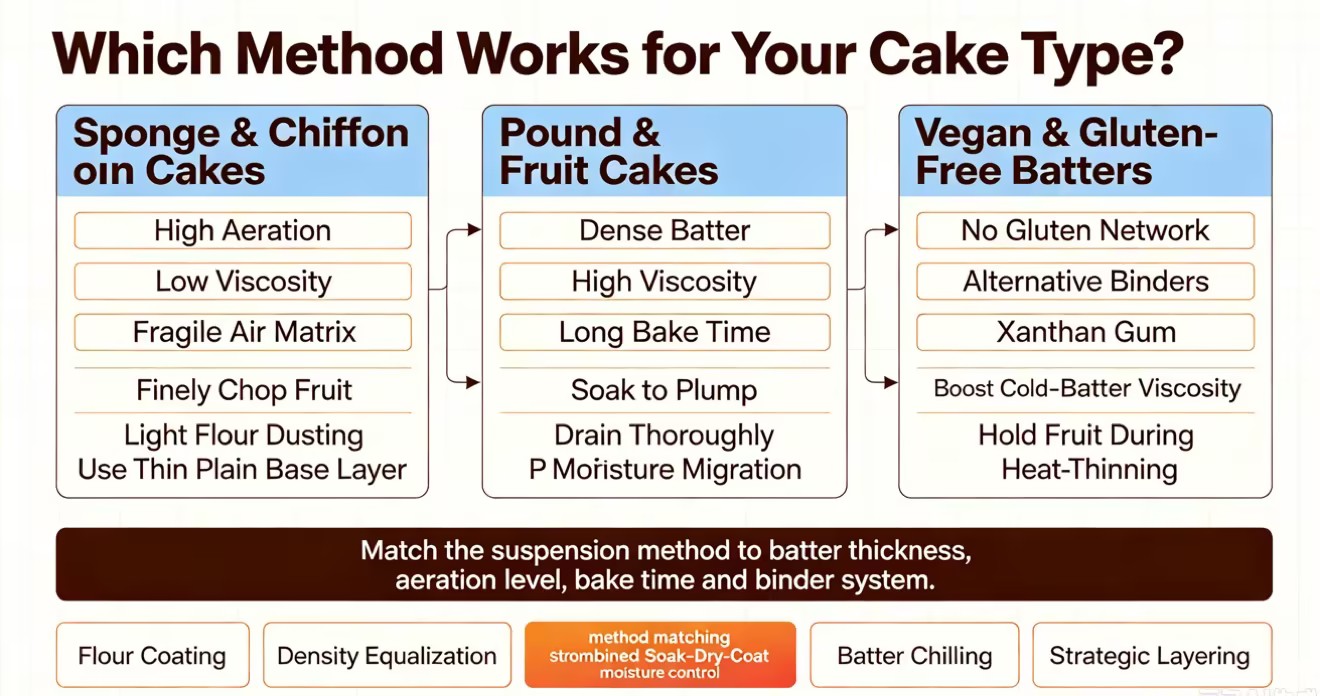
Pound cake batter is naturally thick, so it can usually hold raisins in place without sinking. The main concern is moisture. Dry raisins may absorb moisture from the cake during the long baking time, making the surrounding crumb dry. Soaking the raisins first helps keep them soft and reduces moisture loss. After soaking, drain and dry them thoroughly, then gently fold them into the batter.
Traditional baking relies on gluten networks to trap sinking fruit. Glutenin and gliadin proteins form an elastic web that catches inclusions as the batter thins. Vegan and gluten-free batters lack this structural safety net. Without gluten, the heat-thinning phase is much more severe, and fruit drops rapidly.
To compensate for the lack of a gluten network, you must artificially boost the cold-batter viscosity. The recommended approach involves utilizing alternative binders. Adding a small percentage of xanthan gum, guar gum, or modified tapioca starches will thicken the batter significantly before it even enters the oven. A standard ratio is 1/4 teaspoon of xanthan gum per cup of gluten-free flour. These hydrocolloids hold onto water tightly, preventing the batter from thinning out too much when heated, thereby holding the inclusions securely in place.
Evaluate your specific recipe's hydration level and batter thickness before selecting a suspension method.
Wash commercial oils and syrups off your dried fruit using warm water to ensure friction barriers can adhere.
Measure and subtract your coating flour directly from the main recipe's total dry weight to maintain the correct hydration ratio.
Prepare your baking pan by pouring a shallow base layer of plain batter before adding the mixed batter on top.
A: They sink because their specific gravity is much higher than the aerated cake batter. As the oven heats the cake, the butter melts and sugars dissolve, causing the batter to thin out rapidly. During this heat-thinning phase, the batter loses its structural resistance, allowing dense inclusions to fall to the bottom before the cake sets.
A: Yes, but only under specific conditions. The flour creates surface friction that grips the batter. However, it is only effective in medium-to-thick batters, not thin liquids. You must also wash off any commercial oil coatings from the fruit first, or the flour will turn into a slippery paste instead of a friction barrier.
A: Yes, soaking provides excellent density equalization. It plumps the fruit, increasing its volume without adding much mass, making it closer in density to the batter. It also prevents the fruit from drawing moisture out of the baked crumb. However, you must drain and pat them completely dry to avoid soggy pockets.
A: Absolutely. Combining these techniques is one of the most effective hybrid methods for keeping fruit suspended. By soaking the fruit to lower its density, draining it thoroughly, and then tossing it in a light dusting of flour, you maximize both buoyancy and surface friction for reliable suspension.
A: Sponge cakes have a very fragile, thin air matrix. To keep fruit suspended, you must finely chop the pieces to reduce their mass. Dust the chopped pieces lightly in flour. Finally, pour a thin layer of plain batter into the pan first to act as a physical buffer before adding the fruited batter.
A: Yes, the principles of density equalization and surface friction apply to all dense inclusions. Whether you are using other dried fruits, fresh berries, or heavy chocolate chips, managing the weight of the inclusion and the viscosity of the batter will prevent them from sinking.
A: Chilling the batter can help. Cold batter slows down the melting of fats and the dissolving of sugars in the oven. This delays the heat-thinning phase, giving the outer edges of the cake more time to set and coagulate around the suspended fruit before the internal batter becomes too thin.


