
English


Views: 0 Author: Site Editor Publish Time: 2026-07-22 Origin: Site


Transitioning from small-scale baking to commercial production requires a fundamental shift in infrastructure. Equipment reliability directly dictates your profit margins. When scaling up, a poorly planned facility limits your daily output. Misallocating capital on the wrong items in your commercial bakery equipment list leads to production bottlenecks, excessive utility demands, and stranded assets. Conversely, under-equipping results in inconsistent product quality and high labor demands.
To build a facility that balances upfront investment with long-term throughput, operators must align purchasing decisions with specific product lines. You must audit facility constraints and map out growth projections before ordering heavy machinery. This guide breaks down the essential infrastructure needed to scale your bakery operations effectively. You will learn how to match equipment capacity to your menu, navigate facility limitations, and build a production line that maximizes efficiency.
Menu Dictates Machinery: Your core product (e.g., artisan sourdough vs. laminated pastries) determines whether you prioritize deck ovens and spiral mixers or convection ovens and dough sheeters.
Facility Constraints Precede Purchases: Electrical phasing (single vs. three-phase), water hardness, ventilation requirements (Type I vs. Type II hoods), and floor space must be audited before finalizing any commercial bakery equipment list.
Compliance is Non-Negotiable: All selected equipment must meet NSF standards and local health department codes to avoid operational delays and fines.
Table of Contents
Your menu directly dictates your mechanical needs. Hydration levels in your dough heavily impact mixer selection. High-hydration doughs require gentle handling to preserve open crumb structures. Stiff doughs demand immense torque to prevent motor burnout. High-volume bread production relies on heavy-duty spiral mixers and automated dividers. Delicate patisserie items require precise temperature controls, reversible sheeters, and convection ovens. You must map out your exact product mix before selecting machinery. A bakery focusing on laminated pastries will allocate floor space differently than a wholesale bagel operation. Understanding these distinctions prevents purchasing redundant machinery.
Consider the specific gravity of your batters and the gluten development required for your breads. A shop producing mostly cakes and cookies will lean heavily on planetary mixers with paddle attachments. A sourdough bakery needs spiral mixers that can handle 75% hydration doughs without heating the mass beyond 78 degrees Fahrenheit. Every item on your menu must be traced back to a specific machine to justify its footprint on the production floor.
Understanding your required hourly output is necessary to meet daily sales targets. You must calculate how many units you need to produce per shift. This calculation dictates the physical size of your equipment. Batch sizing ensures your mixers, proofers, and ovens share matching capacities. If your mixer produces 100 pounds of dough, but your oven only holds 20 pounds at a time, you create a severe bottleneck. Aligning capacity across all production stages prevents dough from over-proofing while waiting for oven space.
To calculate throughput, start with your peak sales volume. If you need 500 baguettes ready by 7:00 AM, work backward. How many baguettes fit on a single pan? How many pans fit in your rack oven? How long is the bake cycle? This math reveals exactly how many ovens you need. Apply this same logic to your mixers and proofers. A well-designed production line operates like a continuous flow, where no single machine forces the others to sit idle.
Never order equipment without conducting a comprehensive utility audit. Heavy machinery requires specific electrical configurations. You must verify your facility's voltage, amperage, and phase capabilities. Many industrial ovens and mixers require three-phase power. HVAC and exhaust hood requirements vary based on oven types and local fire codes. Steam-generating ovens and proofers require dedicated water filtration and softeners. Mineral scale buildup destroys internal heating elements rapidly. Always measure doorways, hallways, and delivery paths before ordering large-footprint items to ensure they actually fit inside your building.
Water quality is often overlooked. Hard water will calcify the steam injection nozzles in a deck oven within months. Installing a commercial water softening system is a mandatory step for any bakery utilizing steam. Additionally, check your floor load capacity. A multi-deck stone hearth oven can weigh several tons. Older buildings may require structural reinforcement before installation. Map out your floor drains as well; commercial pan washers and large kettles require immediate proximity to floor sinks.
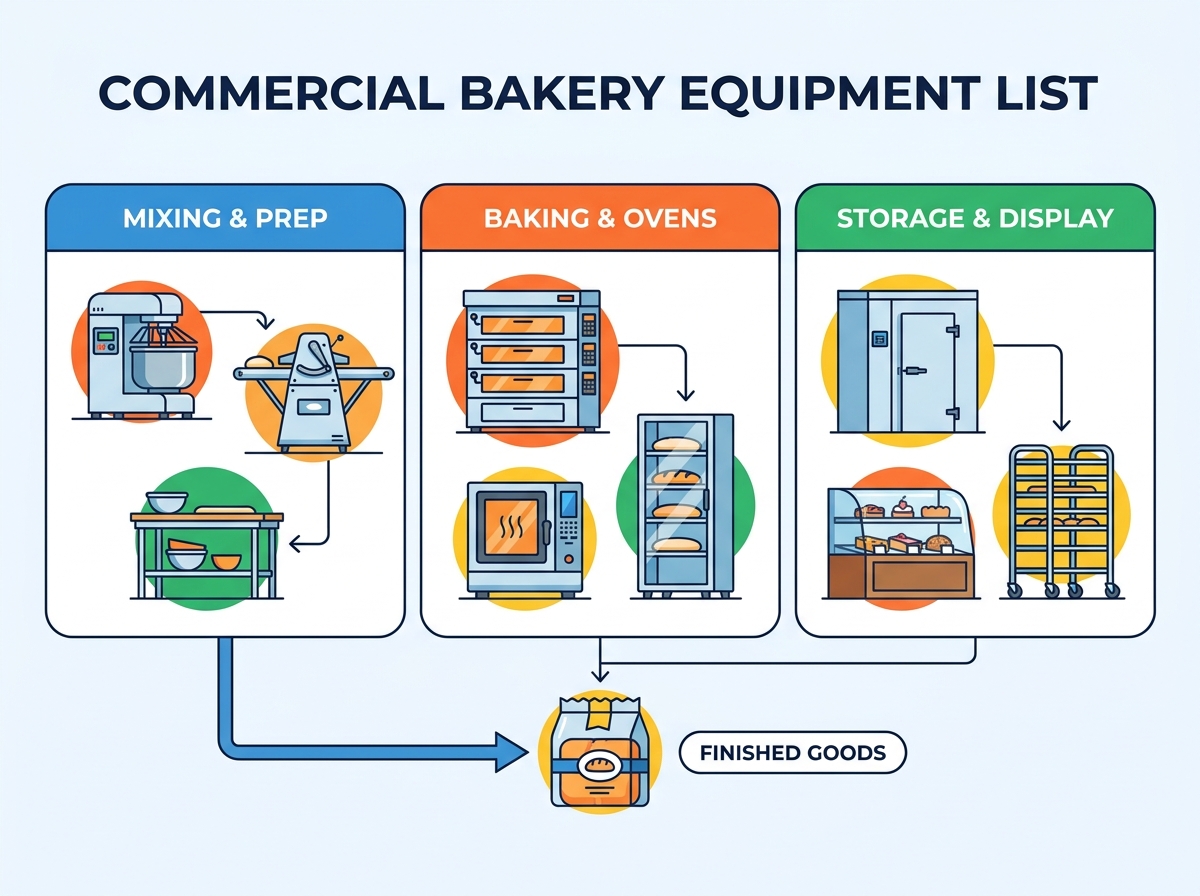
Planetary mixers offer unmatched versatility for batters, creams, and light doughs. They utilize interchangeable attachments like whips, paddles, and dough hooks. Sizes range from 20-quart countertop models to 140-quart floor units. Spiral mixers are mandatory for heavy, low-hydration doughs like bagels and artisan breads. The bowl rotates with the hook, preventing dough overheating through friction. Horizontal mixers serve high-volume industrial bread lines requiring rapid dough development. Water meters and chillers maintain consistent hydration temperatures for standardized fermentation. Bowl lifters and tilters eliminate the physical strain of manually transferring heavy dough batches to processing tables.
Mixer Type | Best For | Key Advantage | Capacity Range |
|---|---|---|---|
Planetary Mixer | Cakes, cookies, batters, creams | High versatility with multiple attachments | 20 to 140 Quarts |
Spiral Mixer | Artisan breads, bagels, pizza dough | Low friction, handles stiff doughs easily | 50 to 300+ Pounds |
Horizontal Mixer | Industrial bread, bun production | Maximum throughput and rapid mixing | 500+ Pounds |
When selecting a mixer, consider the horsepower rating alongside the bowl capacity. A 60-quart mixer with a weak motor will stall when mixing stiff bagel dough. Always consult the manufacturer's absorption ratio chart. This chart dictates the maximum batch size based on the moisture content of your dough. Pushing a mixer past its rated capacity for a specific hydration level will strip the internal gears.
Dough dividers and rounders offer massive labor savings for high-volume roll and bun production. Semi-automatic and fully automatic models ensure consistent portion sizing. Intermediate overhead proofers allow dough balls to rest between dividing and final shaping. This resting period improves crumb structure and restores dough elasticity. Reversible dough sheeters are essential for laminated doughs like croissants and puff pastry. They compress butter and dough into microscopic layers. Floor models handle higher volumes, while tabletop sheeters save valuable space. Moulders and shaping equipment standardize loaf and baguette production, ensuring uniform baking times.
Bulk Fermentation: Dough rests in large tubs to develop flavor and structure.
Dividing: The mass is cut into exact weight portions using a volumetric divider.
Rounding: Portions are shaped into tight boules to create surface tension.
Intermediate Proofing: Dough rests for 10-15 minutes to relax the gluten network.
Final Shaping: Moulders roll the dough into cylinders, baguettes, or batards.

Proofing cabinets provide the precise temperature and humidity controls required for active yeast fermentation. Inconsistent proofing environments lead to dense, unevenly baked goods. Retarder-proofers offer a distinct operational advantage. They utilize automated cold-to-warm cycles. You can load raw dough in the afternoon, keep it chilled overnight to develop flavor, and program the cabinet to warm up before the morning shift arrives. This automation drastically reduces early morning labor requirements.
A standard proofing cabinet simply holds heat and moisture. A retarder-proofer acts as a refrigerator first, then switches to a proofer based on a digital timer. This allows a single baker to arrive at 4:00 AM to fully proofed croissants ready for the oven, rather than arriving at midnight to start the proofing process manually. The labor savings alone often justify the higher equipment cost within the first year of operation.
Convection ovens utilize internal fans for rapid, even heat distribution. They are ideal for cookies, cakes, and pastries. Deck ovens are the standard for artisan breads. They utilize radiant heat and stone hearth plates to develop thick, crusty exteriors. Integrated steam injection is necessary for proper oven spring. Rack ovens handle high-volume throughput using roll-in racks. Single and double rack capacities allow you to bake hundreds of items simultaneously. Rotary ovens spin the internal rack, ensuring maximum consistency in high-capacity environments.
Oven Type | Heating Method | Ideal Products | Footprint |
|---|---|---|---|
Convection | Forced hot air via fans | Cookies, muffins, cakes, laminated pastries | Compact / Stackable |
Deck Oven | Radiant heat from stone hearths | Artisan sourdough, rustic breads, pizza | Large / Wide |
Rack Oven | Convection with rotating rack | High-volume buns, pan bread, wholesale pastries | Very Large / Tall |

Cooling racks require significant floor space. Stainless steel racks offer superior durability, while aluminum racks are lighter and easier to maneuver. Bread slicers utilize reciprocating blade frames or continuous band blades. Blade spacing determines slice thickness, and safety mechanisms protect operators from injury. Packaging stations require bagging, heat sealing, and labeling equipment to prepare goods for retail. Inline metal detectors are vital for food safety compliance. Wholesale distribution contracts often require automated product inspection prior to shipping.
Do not underestimate the space required for cooling. Bread must cool completely before slicing or packaging, otherwise condensation will form inside the bag, leading to rapid mold growth. A high-volume bakery might need ten times as much space for cooling racks as they do for ovens. Plan your floor layout to accommodate this bottleneck.
Scaling facilities rely on bulk ingredient systems. Pneumatic flour silos and automated ingredient dispensers streamline the mixing process. Dry storage areas require mobile ingredient bins, dunnage racks, and heavy-duty shelving to keep ingredients off the floor. Refrigeration and freezers fall into two categories. Walk-in units handle bulk storage and overnight dough retarding. Reach-in units keep perishable ingredients accessible directly on the prep line.
Proper ingredient storage prevents pest infestations and cross-contamination. Flour should be stored in food-grade bins with tight-fitting lids, never left in open paper sacks. Dunnage racks keep heavy bags of sugar and salt at least six inches off the floor, complying with health department regulations. Walk-in coolers should be sized to hold at least three days' worth of perishable inventory, plus space for rolling racks of retarded dough.
Worktables must meet health codes and suit your product types. Stainless steel tables are universally accepted and easy to sanitize. Wood-top baker's tables are preferred for shaping dough but require strict maintenance. High-precision digital commercial scales are mandatory for executing baker's percentages and bulk weighing. Essential bakeware includes heavy-duty aluminum sheet pans, pullman loaf pans, baguette trays, and silicone baking mats. Specialized smallwares include proofing baskets, baker's couches, scoring lames, and flexible bowl scrapers.
Digital Scales: Required for accurate baker's math. Measure in grams for precision.
Sheet Pans: 18x26 inch full-size aluminum pans are the industry standard.
Couches: Heavy linen cloths used to support baguettes during proofing.
Bannetons: Rattan baskets that give artisan boules their shape and flour rings.
Regulatory requirements mandate specific sink configurations. You must install 3-compartment sinks for manual warewashing, dedicated handwashing stations, and mop sinks for facility maintenance. Commercial pan washers offer an excellent return on investment. These specialized, high-capacity utility dishwashers strip heavy grease and baked-on residue from bakery pans and racks. They drastically reduce the labor hours spent scrubbing equipment at the end of a shift.
A standard restaurant dishwasher cannot accommodate 18x26 inch sheet pans or 60-quart mixing bowls. You need a dedicated pot and pan washer with a high clearance door. Ensure your hot water heater can supply the necessary recovery rate to keep the wash tank at sanitizing temperatures. A dedicated grease trap is also required by municipal water authorities to prevent butter and shortening from clogging city sewer lines.

Purchasing used equipment carries inherent risks and rewards. Stainless steel tables, cooling racks, and sinks are safe secondary market purchases. Ovens, refrigeration units, and complex mixers should generally be purchased new. New equipment includes manufacturer warranties and guaranteed part availability. Used equipment hides unknown wear and tear. Obsolete parts and reduced energy efficiency can quickly erase any initial savings.
If you buy a used spiral mixer and the main drive gear fails, you might wait six weeks for a replacement part from Europe. During that time, your production halts. When buying new, you secure a warranty and a relationship with a local service agent. Reserve your used equipment budget for items without moving parts or electrical components.
Preserving operational cash flow is vital for new bakeries. Capital Expenditures require large upfront cash reserves. Equipment leasing options allow you to spread payments over time. Equipment-as-a-service models and specialized commercial kitchen financing structures provide alternative paths to acquire necessary machinery. Leasing high-wear items ensures you can upgrade to newer technology when the lease term expires.
Many equipment dealers offer lease-to-own programs. This allows you to outfit your entire facility while keeping cash on hand for payroll and ingredient inventory during the slow opening months. Always read the terms regarding maintenance responsibilities; some leases cover all repairs, while others place the burden entirely on the operator.
Utility demands significantly impact your monthly overhead. Gas ovens generally offer different operational dynamics compared to electric models. You must analyze your local utility rates to determine which power source is more viable. Energy Star ratings indicate high-efficiency equipment. Many local utility companies offer rebates for installing energy-efficient ovens and refrigeration units.
Electric deck ovens provide precise top and bottom heat control for each individual chamber. Gas ovens often rely on a single burner system, making it harder to bake different products simultaneously at varying temperatures. However, in regions with high electricity costs, gas remains the preferred choice for high-volume rack ovens.
Health inspectors scrutinize equipment certifications. Non-NSF certified equipment often leads to failed health inspections. Commercial equipment must feature cleanable surfaces, coved corners, and accessible internal components. Domestic appliances lack these sanitary design features and are strictly prohibited in commercial facilities.
Look for the NSF or ETL Sanitation mark on every piece of equipment you purchase. This certification guarantees the machine was designed to prevent foodborne illness. Wood-top tables, while traditional, are heavily regulated. They must be made of hard maple and sealed properly. Many health departments prefer you stick entirely to 304-grade stainless steel.
Manufacturing delays frequently impact specialized European baking equipment. You must account for extended lead times when planning your facility opening. Sequence your equipment orders to align with your construction schedules. Order heavy infrastructure like walk-in coolers and large ovens early, as they often need to be installed before interior walls are finished.
A custom deck oven from Italy can take 16 weeks to manufacture and another 4 weeks to ship. Do not sign a commercial lease without factoring in these equipment lead times. Work closely with your general contractor to ensure the electrical panels and gas lines are ready before the equipment arrives on site.
Purchasing obscure equipment brands introduces severe operational risks. If local service technicians cannot source replacement parts, a minor breakdown halts production for weeks. Verify that regional parts depots support your chosen brands. Establish preventative maintenance schedules for high-wear items. Mixer belts, oven door seals, and heating elements require regular inspection.
Before buying a machine, call three local commercial kitchen repair companies. Ask them if they service that specific brand and if they stock common parts. If they say no, choose a different brand. Your equipment is only as good as the technician available to fix it at 2:00 AM on a Saturday.
Complex programmable equipment introduces the risk of user error. Staff must be thoroughly trained on digital control panels and automated cycles. Ergonomics play a major role in staff retention. Evaluate equipment features that reduce repetitive strain injuries. Bowl lifters, automatic oven unloaders, and height-adjustable prep tables protect your workforce from physical burnout.
Lifting 80-pound dough masses out of a mixer bowl multiple times a day will destroy a baker's back. Invest in a bowl lifter. It tilts the heavy bowl and dumps the dough directly onto the processing table. Protecting your staff from injury reduces workers' compensation claims and keeps your production line moving smoothly.
Selecting the right commercial bakery equipment is essential for building an efficient, scalable, and reliable bakery operation. Investing in equipment that matches your production goals, facility conditions, and product range helps maximize productivity while maintaining consistent baking quality.
At Baker's Kingdom, we specialize in advanced commercial bakery equipment and complete production solutions for bakeries worldwide. Our customized equipment and professional technical support help customers improve production efficiency, ensure consistent product quality, and support long-term business growth.
Before purchasing commercial bakery equipment, carefully evaluate your product mix, production capacity, utility requirements, available floor space, and future expansion plans to ensure the best long-term investment for your bakery.
A: The oven and the mixer are the two most critical assets. They dictate your absolute maximum production capacity. If either piece is undersized, the entire production line experiences severe bottlenecks, regardless of how efficient your other equipment is.
A: It depends on your menu. Spiral mixers are essential for stiff, heavy doughs like artisan bread and bagels because they reduce friction. Planetary mixers are highly versatile and better suited for batters, cakes, and whipped creams.
A: Most commercial ovens require three-phase electrical power. Ventilation requirements depend on the oven type. Gas ovens and units producing grease laden vapors typically require Type I or Type II exhaust hoods to comply with local fire codes.
A: No. Residential equipment lacks NSF certification and violates commercial health codes. It is not designed to withstand continuous daily use and will fail quickly under commercial production volumes.
A: Operators frequently use commercial kitchen equipment leasing programs or specialized financing structures. Leasing preserves upfront capital and often allows for equipment upgrades at the end of the term.
A: A proofer creates a warm, humid environment to accelerate yeast fermentation. A retarder is a specialized refrigeration unit that cools dough to slow down fermentation, allowing for flavor development and delayed baking schedules.


