
English


Views: 0 Author: Site Editor Publish Time: 2026-11-04 Origin: Site


Buying bulk matcha powder starts with defining the ingredient and the finished product it needs to serve. A powder for a chiffon cake may need a different flavor profile and dispersion behavior from one used in a lightly sweetened beverage. Pure tea powder and a formulated matcha ingredient also require different checks for composition, dosage, and labeling.
For food manufacturers, the most useful comparison combines an agreed specification with testing in the actual recipe. Confirm the ingredient identity first, evaluate it under the intended processing conditions, and then compare the cost at the dosage that delivers an acceptable result.
Table of Contents
Request the complete ingredient declaration for the exact product reference. Establish whether it is pure tea powder or a formulated product containing additional ingredients. For formulated products, ask for the information needed to assess allergens, additives, usage conditions, and the finished product’s ingredient statement.
Baker’s Kingdom lists flavored products on its Bake Stable Matcha Powder page. Buyers should confirm the selected variant and its composition before making a pure-tea claim or comparing its price with an unblended powder.
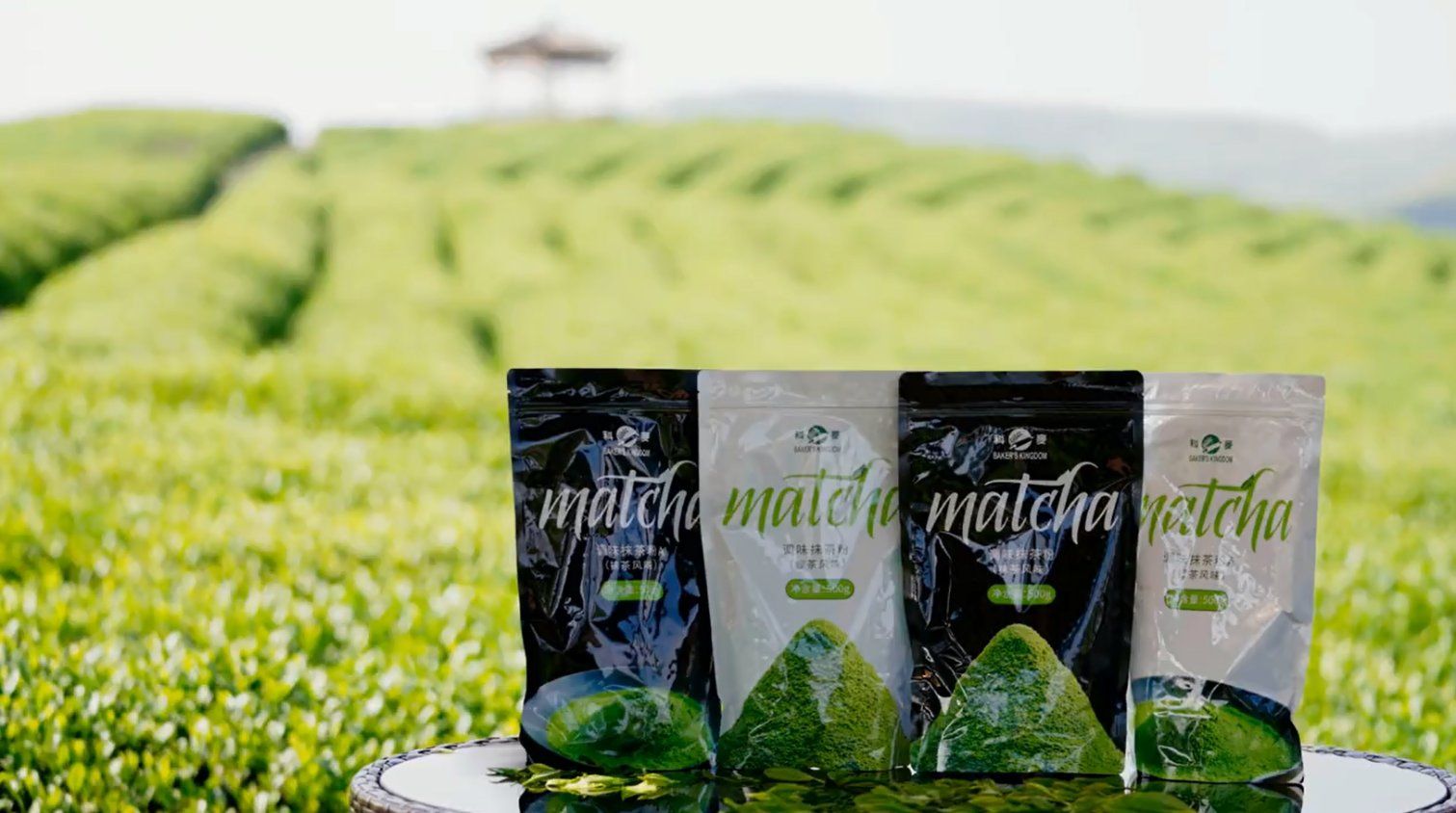
Terms such as culinary, café, and ceremonial describe a supplier’s positioning. Ask what distinguishes the grades in measurable and sensory terms. Useful details include the ingredient composition, origin, particle-size specification, flavor profile, and recommended applications.
Choose a grade by testing it in the recipe. A more expensive powder may be justified in a simple beverage where its flavor remains prominent. In a rich filling or baked product, compare whether that difference is still perceptible after processing and storage.
Request origin and traceability information that matches the selected product. If a geographic origin, harvest, cultivar, organic status, or processing method forms part of your buying specification or label claim, obtain supporting documentation.
Baker’s Kingdom’s product page describes a Hangzhou origin and presents both green tea and matcha flavor variants. Confirm those details for the product code being quoted. Keep origin, flavor description, and ingredient composition as separate fields in the purchasing record.
Compare the dry powders under consistent lighting, then assess the finished products after baking, heating, freezing, or other relevant processing. Record the recipe, dosage, process conditions, and evaluation time.
If instrumental color measurement is useful, agree on the sample preparation, measurement conditions, and acceptable variation. Measuring a dry powder and measuring a cake crumb answer different questions. Keep a retained reference for each stage used in approval.
Taste samples at a controlled dosage in the intended base, including its sugar, fat, dairy or plant ingredients, and acids. Record tea intensity, bitterness, astringency, aroma, and aftertaste. Use a consistent evaluation procedure so the team can distinguish ingredient differences from preparation differences.
Baker’s Kingdom presents applications including chiffon cake, custard bread, croissants, and smoothies. Use the relevant application as a starting point for a trial, then assess the selected powder in your own formula and process.
Application | Main evaluation questions |
|---|---|
Cakes, cookies, and bread | Does the flavor remain recognizable after baking, and is the finished color acceptable? |
Creams and fillings | Does the powder disperse evenly, and how does it taste in the fat and sugar system? |
Ice cream and frozen desserts | How do flavor and texture change after freezing and storage? |
Dairy or plant-based beverages | Are dispersion, sedimentation, mouthfeel, and flavor acceptable through shelf life? |
Dry mixes | Does the powder blend consistently, resist caking, and perform after preparation? |
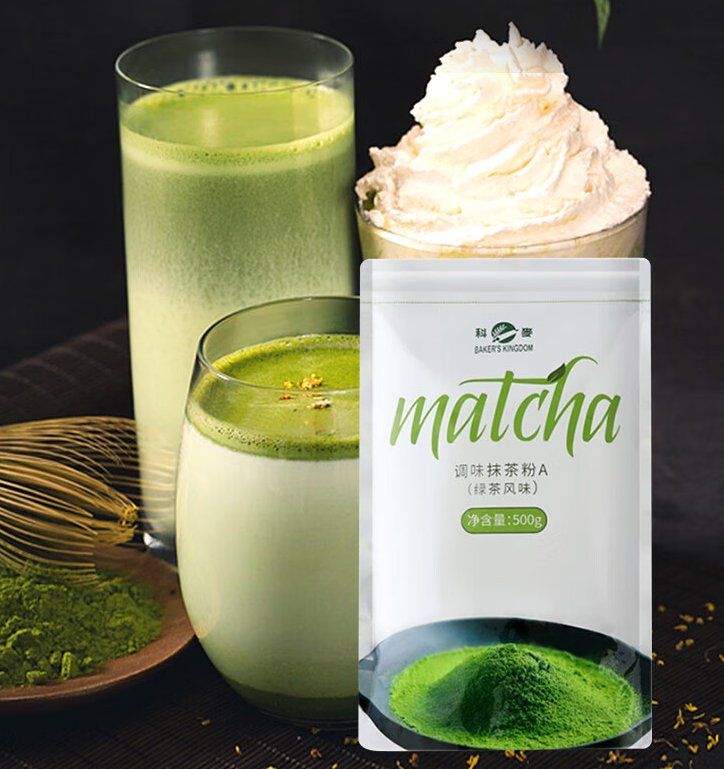
Matcha contains suspended tea particles. Examine how the selected powder wets, disperses, and settles in the intended product. If particle size is important, request the measurement method and distribution data, such as D50 and D90, with their reporting basis.
A supplier’s mesh description needs clarification before it can be compared with a micron-based distribution. Trial the mixing sequence as well. Preblending with a compatible dry ingredient or preparing a slurry may help dispersion, depending on the recipe and equipment. Confirm the method through a pilot run.
Evaluate cost per finished batch alongside price per kilogram. As a hypothetical example, Powder A costs $20/kg and requires 0.8 kg per 100 kg batch, giving an ingredient cost of $16. Powder B costs $15/kg and requires 1.2 kg, giving a cost of $18.
This comparison assumes both versions meet the same sensory, labeling, and processing requirements. Add relevant differences in handling, rejects, and packaging before approving the commercial choice. The example is a calculation and does not represent Baker’s Kingdom pricing or recommended dosage.
Moisture content measures the amount of water in the ingredient. Water activity describes how available that water is for reactions and microbial growth. Set each requirement using the product characteristics, risk assessment, and intended use.
A low-moisture powder still needs appropriate food safety controls. Review the supplier’s process and microbiological specification, particularly if the powder is added after a heat treatment or used in a product without a validated control step.
Obtain a current specification, ingredient declaration, allergen information, lot identification, and the applicable certificate of analysis. Confirm which properties are checked for every lot and which are covered by periodic verification.
Define pesticide, contaminant, and microbiological requirements for the ingredient and destination market with the responsible quality team. Review analytical methods, reporting limits, and the scope of each report. If certification is required by your customer or purchasing policy, verify the issuing body, site, scope, and validity.
Set acceptable sensory and physical variation before the first commercial order. Keep an approved sample with the product reference, specification revision, and trial results. For important launches, compare more than one production lot where practical.
Ask how the supplier will communicate changes to origin, formulation, milling, packaging, or production location. An unchanged sales name can accompany a change that affects the recipe or label. Include the review process in the supply agreement.
Start with a documented bench trial using the production recipe. Take the preferred sample through a pilot process and evaluate it in the intended package. Include checks at relevant storage intervals under the product’s actual storage conditions.
Compare color, flavor, texture, separation, and other agreed attributes. A chilled dessert, frozen product, and ambient dry mix need different test plans. Retain the sample identity and process record so the approved result can be reproduced.
Bulk purchasing can involve multiple smaller packs. Select the format according to batch size, opening frequency, dosing method, and the amount left after production. Compare handling convenience and exposure during use with packaging cost.
Baker’s Kingdom lists 500 g packs and 40 packs per carton on its product page. Confirm the applicable format, packaging materials, remaining shelf life at delivery, and any alternative order options before placing a purchase order.
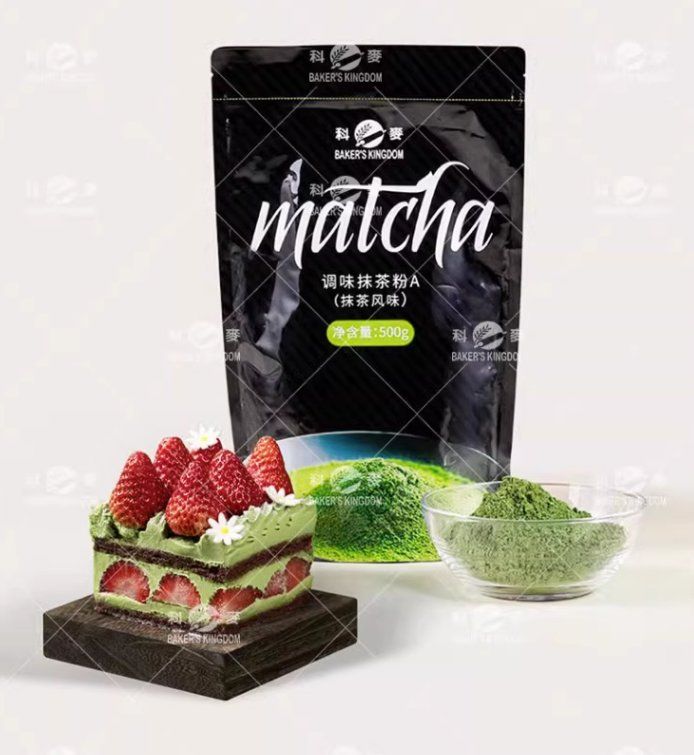
Confirm unopened storage conditions, shelf life, and handling after opening for the selected product. Keep packages sealed and protect them from moisture and light according to the supplier’s instructions.
Where chilled storage is specified, agree on a procedure that avoids condensation when the package is opened. Record opening dates and define a practical resealing and stock-rotation system. Match the procedure to the actual factory environment.
RFQ field | Information to provide or request |
|---|---|
Finished product | Application, target market, and intended product claims |
Ingredient identity | Pure tea or formulated product, with full composition |
Process | Mixing sequence, relevant heat treatment, freezing, or other conditions |
Performance | Target dosage, flavor, color, mouthfeel, and shelf-life requirements |
Quality documents | Specification, COA requirements, allergens, and applicable test reports |
Packaging | Preferred pack size, batch use, labeling, and storage conditions |
Supply | Trial quantity, forecast volume, delivery destination, and timing |
Review Baker’s Kingdom’s matcha powder and cocoa premix range when preparing a shortlist. Identify the exact product reference before requesting samples and commercial terms.
Select a product that delivers the required result in the recipe. Compare the grades at an approved dosage after processing and storage. A higher-priced grade is useful when its contribution remains relevant to the finished product.
Agree on a product-specific limit with the supplier and quality team. Review water activity separately where relevant. Confirm the methods, acceptance limits, and food safety controls supporting the ingredient.
Use the intended beverage base, dosage, mixing method, process, and package. Evaluate flavor, mouthfeel, sedimentation, and color through the planned shelf life. A water tasting can supplement this work.
Performance depends on the selected ingredient, dosage, recipe, and process. Request application information, then test the powder under your own baking and storage conditions before approving the result.
Send the application, target market, recipe constraints, expected dosage, process, quality requirements, and volume forecast. Specify whether you require pure tea powder or can evaluate a formulated matcha ingredient.
Developing a matcha cake, filling, beverage, or dessert? Share your application brief with Baker’s Kingdom to discuss product selection, samples, packaging, and the documentation needed for your evaluation.


