
English


Views: 0 Author: Site Editor Publish Time: 2026-11-06 Origin: Site


When comparing culinary grade vs ceremonial grade matcha, products marketed for culinary use are a practical starting point for bakery trials. However, the label alone cannot establish which powder will deliver the best cake, cookie or filling.
Matcha sold for drinking can also work in baking. Its additional cost may be worthwhile if it produces a noticeable improvement in the finished product. Equally, a powder labeled culinary grade still needs evaluation for flavor, appearance and consistency.
For professional bakeries, the best choice is the ingredient that meets the product specification at an acceptable cost per saleable portion. Begin with the recipe and processing conditions, then compare representative samples.
Table of Contents
Suppliers commonly use “ceremonial” to position matcha for whisking with water and “culinary” to position it for mixing into food or drinks.
Treat these descriptions as starting points for a supplier discussion. They do not provide a shared technical specification across brands.
A grade name alone does not establish harvest timing, shading duration, particle size, chemical composition or baking performance. Request supporting information when any of those characteristics matters to your product.
A powder can be pleasant to drink and perform well in a recipe. Another may be suitable for a strongly flavored cookie but less successful in a delicate cream.
These outcomes reflect the individual ingredients and applications. They do not prove that one label always represents better quality.
Price and appearance also need context. A low price does not establish mislabeling, while a bright green photograph cannot verify origin or composition.
Use the supplier’s actual specification to replace broad assumptions.
Buying question | Culinary-labeled matcha | Ceremonial-labeled matcha |
|---|---|---|
How is it usually positioned? | Mixing into recipes | Drinking with water |
Can it be used in baking? | Evaluate in the intended formula | Evaluate in the intended formula |
Is its harvest timing guaranteed? | Confirm with the supplier | Confirm with the supplier |
Is particle size defined by the label? | Request a measured specification | Request a measured specification |
Does the label guarantee heat tolerance? | No application guarantee | No application guarantee |
How should value be assessed? | Approved result and cost-in-use | Approved result and cost-in-use |
Terms such as premium, café, classic, baking and ingredient grade may help organize a supplier’s range. Their meanings should be confirmed within that range.
Do not assume that “premium culinary” from one supplier matches the same description from another.
Ask what changes between the products. Useful differences might include sensory profile, composition, particle characteristics, recommended applications or price. Each should be supported by product information or trial results.
Sugar, fat, dairy, cocoa and fillings change how tea flavor is perceived. A sample that tastes balanced in water may behave differently in a butter-rich cookie.
Evaluate aroma, tea intensity, bitterness, astringency and aftertaste separately. Strong bitterness is not a requirement for successful baking, and sweetness does not automatically remove excessive astringency.
Test the complete portion, including toppings and fillings. The target is a balanced product with recognizable tea character.
Baking can change tea aroma, pigment appearance and the surrounding food matrix. The grade label does not predict the extent of those changes.
Avoid assuming that all drinking-grade flavor disappears in the oven or that culinary matcha is inherently heat-proof.
Compare samples using the same formula, portion size and baking profile. Assess them after cooling and during the intended selling period.
The oven setting also does not describe the temperature experienced by every part of the product. A crust and a moist interior undergo different conditions.
Raw powder color is a useful reference, but it cannot guarantee the appearance of a finished cake.
Recipe composition, acidity, heat exposure, surface browning and storage can all influence the result. Investigate these variables before attributing every color difference to grade.
Do not add lemon juice or another acid solely to preserve green color. Acidic conditions can promote changes in chlorophyll. Likewise, altering baking soda requires a review of the complete formula.
Define acceptable crust and crumb appearance for the specific product rather than requiring every baked item to match the raw powder.
Neither label guarantees a smooth texture or freedom from clumps.
Request particle-size information with its measurement method. Then evaluate dispersion in the actual process, particularly for smooth creams or chocolate-based components.
Sifting and dry blending may help distribution. A slurry made with measured recipe liquid may suit another formula. Select the method through trials rather than requiring every powder to be sifted twice.
Different applications place different demands on the ingredient.
Application | Main selection priority | Useful comparison |
|---|---|---|
Cookies and biscuits | Tea character after baking | Flavor, spread, texture and surface color |
Sponge and chiffon cakes | Balanced flavor and stable structure | Batter handling, volume and crumb appearance |
Butter cakes and muffins | Compatibility with a rich formula | Aftertaste, moisture perception and slicing |
Cream fillings and frostings | Smooth texture and clean flavor | Dispersion, sweetness balance and storage |
Frozen desserts | Performance in the frozen product | Flavor intensity, mouthfeel and appearance |
Chocolate-based components | Particle and moisture compatibility | Texture, processing behavior and flavor |
Confirm whether the proposed ingredient is pure tea powder or a formulated product. Other components can affect dosage, flavor, sweetness and labeling.
Baker’s Kingdom lists Bake-Stable Matcha Powder, with applications including matcha chiffon cake and custard bread. Request the current ingredient declaration and specification for the exact variant.
Its separate MT-06 Matcha Powder listing describes pure matcha with cold-processed applications. Discuss the intended use before selecting samples.
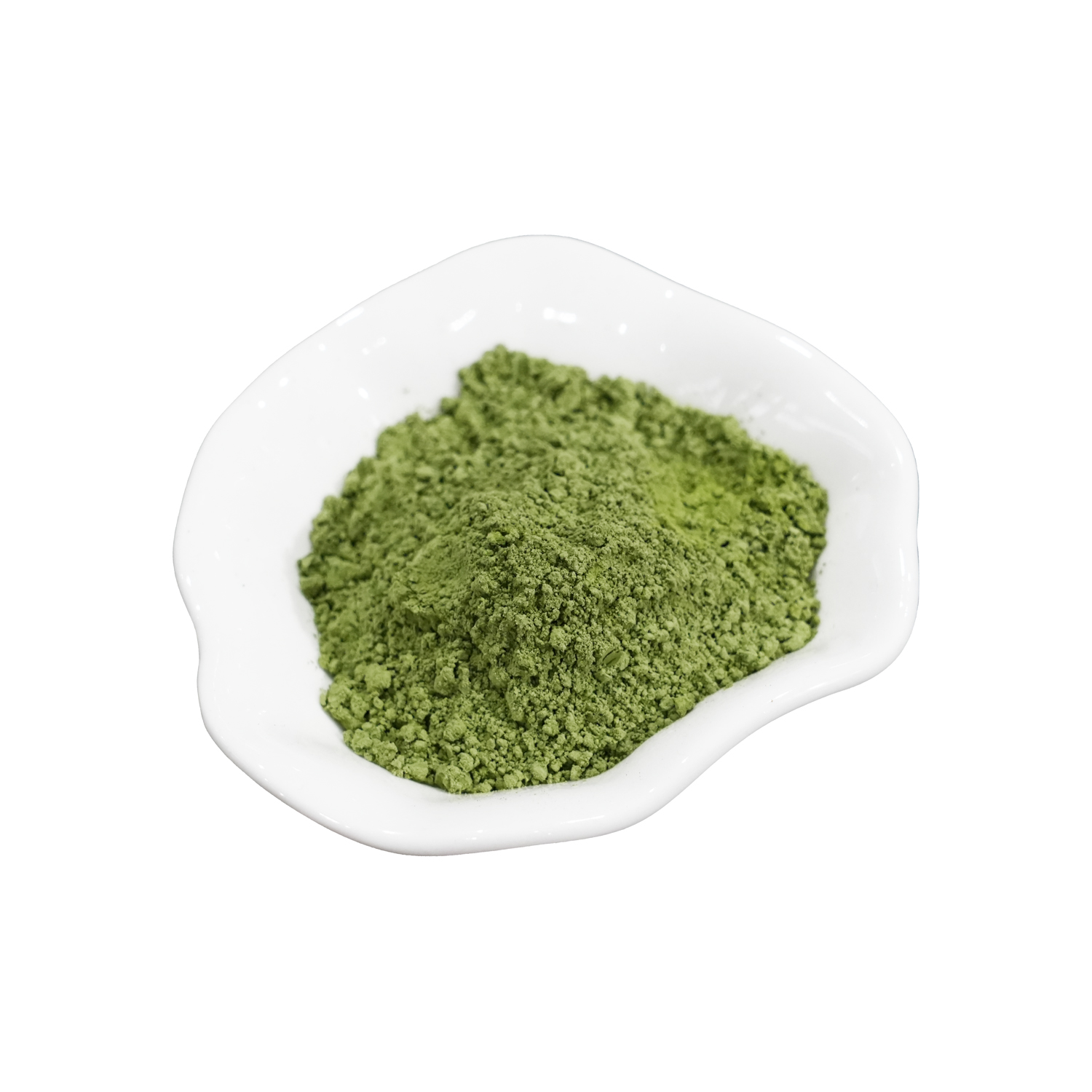
A higher-priced powder may be worth testing where tea is central to the product’s sensory identity. This might include a lightly flavored filling or a dessert with few competing ingredients.
Approval should depend on a detectable improvement and its commercial value. A premium label alone does not establish that benefit.
For a strongly flavored or heavily baked product, compare whether the same distinction remains noticeable in the finished portion.
A sample approved for cookies should not automatically be approved for an unbaked cream.
In addition to sensory testing, confirm suitability and quality requirements for the intended use. Review the relevant ingredient documents and the bakery’s process controls.
A business using one powder across several products should validate each application before making a combined purchasing decision.
Request representative samples and record the supplier, product code and batch number.
When comparing pure powders, an equal-weight addition can provide an initial screening point. It does not establish final dosage equivalence.
Keep the remaining formula and process consistent. If one sample is a formulated ingredient, review its composition before designing the comparison.
Use coded samples where practical so that grade names and prices do not influence the first sensory assessment.
Select promising samples, then adjust dosage in separate trials.
There is no reason to double the amount simply because a product is labeled ceremonial. Nor is there a universal tablespoon limit suitable for every batch size.
Record usage by weight and state the calculation basis consistently. Review flavor, color, texture and handling together before approving the final level.
Calculate powder cost using the dosage that passes the product specification.
Ingredient cost per batch equals price per kilogram multiplied by kilograms used. Divide this by saleable portions to calculate tea ingredient cost per portion.
Then consider freight, handling losses, packaging and rejected products. A cheaper powder may or may not offer better value; the approved recipe determines the comparison.
After a successful trial, agree on the product specification, required documents, packaging, storage instructions and batch acceptance procedure.
Ask how changes in composition, source or processing will be communicated. Compare additional lots where practical before committing substantial volume.
Review the Baker’s Kingdom matcha product range using your application, target market and expected usage. Request current information rather than assigning performance based on a grade name.
Yes. Evaluate it in the intended recipe and compare the result with other samples. It may be suitable, but its additional cost should be justified by the finished product. Do not automatically increase the dosage.
It can if the selected powder or dosage does not suit the formula. Culinary-labeled products vary. Compare bitterness and astringency in the complete product, then adjust the ingredient or dose through controlled trials.
Treat them as supplier-specific descriptions. Ask what each name means within the supplier’s range and request the corresponding specifications and application guidance.
Choose a product suitable for that intended use, with the required flavor, texture and documentation. Test dispersion and storage performance. Neither culinary nor ceremonial labeling alone provides a complete answer.
The label alone cannot establish caffeine content. If caffeine affects the product specification or labeling, request suitable analytical information for the actual ingredient and calculate its contribution at the intended dosage.
To discuss ingredients for your bakery range, contact Baker’s Kingdom with your product format, processing conditions, target flavor and expected quantity. Request current specifications and samples for a comparison in your own recipe.


