
English


Views: 0 Author: Site Editor Publish Time: 2026-11-05 Origin: Site


Why does matcha turn brown during baking? Two important causes are changes in its green pigments and browning reactions in the surrounding dough or batter. Ingredient condition, recipe composition, uneven mixing and storage can also affect the final appearance.
The location and timing of the color change provide useful clues. A brown crust with a green center needs a different investigation from an olive-colored crumb or scattered dark spots.
For commercial bakeries, the first step is to identify the pattern. Then compare controlled trials while checking flavor, texture and adequate baking. There is no single oven temperature, grade name or additive that prevents every type of discoloration.
Table of Contents
Cut a fully cooled sample and inspect the surface, underside and center under consistent lighting.
A browned exterior may mask a green interior. This does not establish that the tea pigments throughout the product have been destroyed.
If the crumb is uniformly dull, investigate the ingredient, formula and processing conditions together. Appearance alone cannot identify a particular chemical reaction.
Record the powder’s appearance, the mixed dough or batter, the cooled product and the packaged product.
If the mixture already differs from the approved reference, begin with weighing, ingredient identity and mixing. If the change appears mainly during storage, review packaging and display conditions.
Observed pattern | Variables to investigate | Useful first check |
|---|---|---|
Brown surface, green center | Surface heating, baking time, finish or glaze | Compare crust and crumb separately |
Dark underside or edges | Pan, liner, product thickness and heat distribution | Compare positions within the same run |
Uniform olive or dull crumb | Ingredient characteristics, recipe chemistry and heat exposure | Compare with the approved formula and powder |
Concentrated dark specks | Powder agglomerates or uneven distribution | Inspect the raw mixture |
Fading after packaging | Light, oxygen, moisture and storage conditions | Compare samples in actual packaging |
Some crust browning is appropriate for bread, loaf cakes and certain cookies. A pale biscuit or exposed sponge layer may require a different target.
Agree on the acceptable appearance for each format. Use consistent photographs or a defined instrumental method where needed.
Evaluate the complete eating experience. A greener product is not automatically acceptable if it is bitter, dry or inadequately baked.
Chlorophyll contributes much of matcha’s green appearance. Its pigment profile can change during processing and storage.
Under acidic conditions, chlorophyll can lose its central magnesium and form pheophytins, which have a duller, olive appearance. Heating can contribute to further changes.
This explains why acid addition should not be treated as a general green-color stabilizer. It also means that an olive crumb should be investigated in the context of the complete recipe.
The Maillard reaction involves amino compounds and reducing sugars. It contributes color and flavor to many baked surfaces.
Caramelization is a separate sugar-related process that may also contribute under suitable conditions. Neither should be used as a blanket explanation for every brown area.
The surrounding ingredients matter. Surface washes, sugar toppings, dairy components and the base dough can influence the visible result.
A formula change can influence pigment appearance and surface browning in different ways.
Acidic conditions can promote chlorophyll changes. More alkaline conditions can encourage Maillard browning. Adding acid or extra baking soda solely to adjust color can therefore introduce new problems.
Review the full acid–base balance and leavening system. Baking soda and baking powder are not interchangeable color-control ingredients.
There is no universal 175°C threshold at which every matcha product suddenly turns brown.
The oven air, pan, surface and interior experience different conditions. Heating also depends on portion size, depth, moisture and residence time.
A lower oven setting with a longer bake may improve one product but worsen dryness or total heat exposure in another. Judge the complete profile through trials rather than applying one temperature ceiling.
Keep deposit weight, thickness, pan preparation and loading consistent. Check actual equipment performance and compare samples across the oven.
Trial changes to time, heat balance, airflow or the tray and liner system. Change one variable at a time so that the result remains interpretable.
A loose foil cover may help limit top browning in an appropriate loaf-cake process. It requires validation and is not a universal option for automated production.
A water bath may suit some custards or cheesecakes, but it does not guarantee a brown-free surface or apply to every bakery format.
Check that the correct ingredient and dosage were used. Review changes in suppliers, batches, fillings, sugars, dairy ingredients or leavening.
Baker’s Kingdom lists Bake-Stable Matcha Powder, with applications including matcha chiffon cake and custard bread. Request the current specification and application guidance for the exact variant.
The company also lists MT-06 Matcha Powder, described as pure matcha with cold-processed applications. Discuss the intended process before selecting samples.
A product name provides a starting point for evaluation. It does not guarantee the same color in every formula.
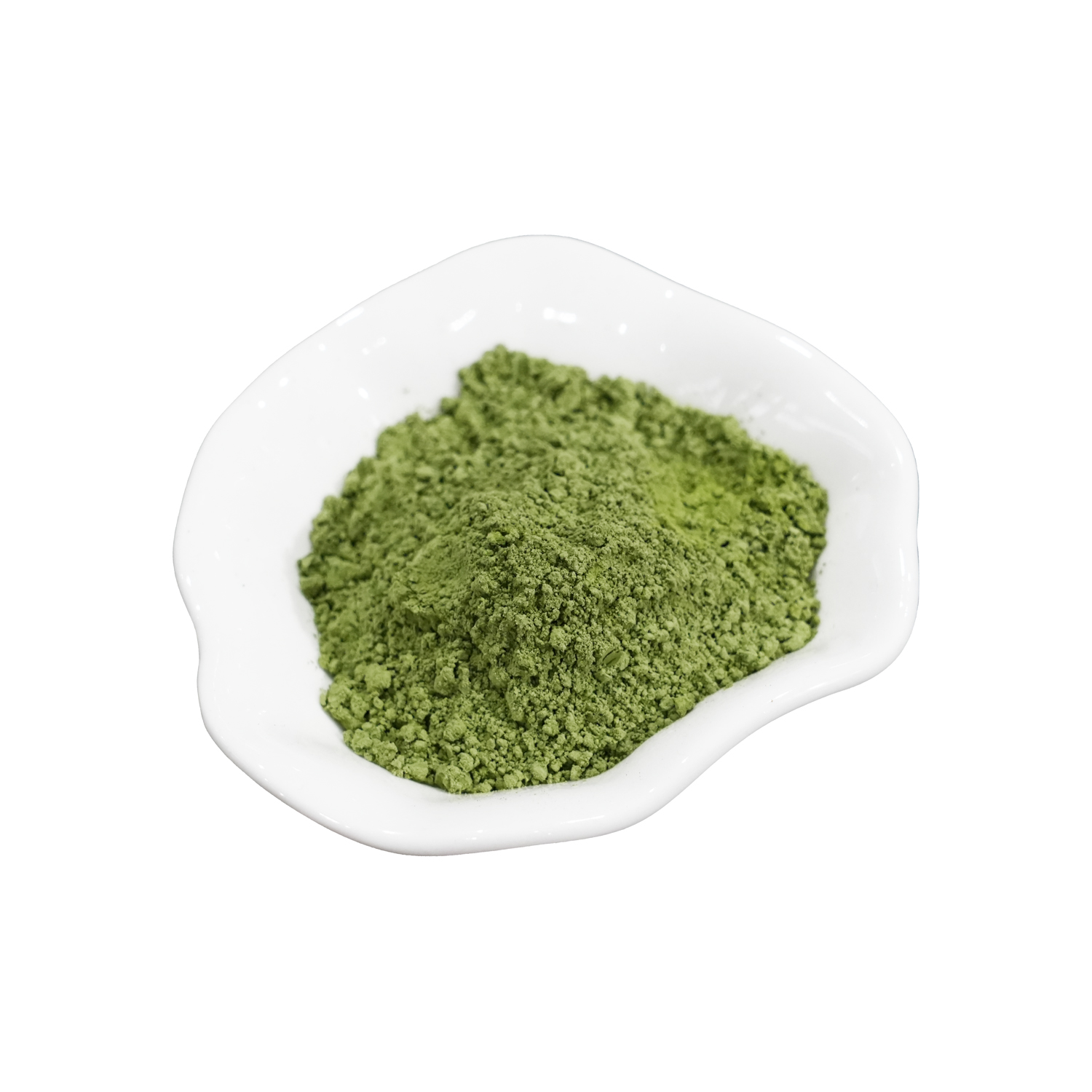
Powder agglomerates can create concentrated spots and uneven flavor. Their appearance does not prove that they have oxidized or burned.
Evaluate sifting and dry blending, or a smooth dispersion made with a measured portion of the formula liquid.
Select the method compatible with the product’s mixing sequence. Inspect the batter or dough before baking, then check the cut crumb.
Avoid adding unrecorded liquid or extending mixing excessively to remove clumps. These changes can affect consistency or aeration.
Follow the powder supplier’s storage instructions and keep opened packs properly closed. Manage moisture, light and unnecessary heat exposure during ingredient handling.
For finished products, compare the intended packaging, storage and display conditions. Evaluate color alongside flavor, texture and the required quality criteria.
A clear package, opaque package or modified atmosphere should be assessed as part of a complete system. None guarantees a particular selling period without testing.
Retain the current formula as a control. Record the powder product code, batch number, dosage and all processing conditions.
Test one proposed correction at a time. Examples include comparing two tray systems, adjusting a baking stage or evaluating another powder in the same recipe.
Photograph the surface and cut interior after a defined cooling period. Repeat the assessment during storage.
More powder may deepen the starting color, but it can also increase bitterness and change handling. It does not reverse pigment changes.
Lower heat exposure must still produce an adequately processed product. Leavening changes can alter volume, spread and aftertaste.
Record saleable yield as well as appearance. A visually improved product that tears, collapses or becomes difficult to package may need further development.
A cream, glaze or finishing layer can provide a different expression of tea color and flavor from the baked base.
Develop it as a separate component. Confirm ingredient suitability, dispersion, storage and the controls required when there is no later heating step.
Do not present a bright topping as evidence that the baked crumb retained its original pigments.
Document the approved powder, formula, mixing route, deposit weight, baking profile and cooling procedure.
Set practical appearance and sensory limits using successful production trials. Include how future ingredient batches will be checked.
When reviewing the Baker’s Kingdom matcha range, provide your application, processing conditions, target appearance and expected usage. Request representative samples and current product documents before approving a change.
The surface experiences different heating and moisture conditions from the center. Surface browning can mask green color while the interior remains acceptable. Check the crust and crumb separately before changing the ingredient.
There is no universal maximum that guarantees color retention. Product depth, moisture, time and equipment all matter. Use an established profile for the format and validate adjustments through appearance, texture and doneness checks.
It should not be used as a general solution. Acidic conditions can promote chlorophyll changes. If lemon is needed for flavor, test it within the complete formula rather than adding it solely to preserve green color.
The label alone cannot establish that result. Compare actual samples in the intended recipe. Ingredient composition, dosage, processing and storage provide a more useful basis for selection than a grade name.
Not necessarily. Agglomerates and uneven distribution can create dark, strongly flavored spots. Inspect the raw mixture and compare incorporation methods before attributing the problem to burning or oxidation.
To discuss ingredients for your application, contact Baker’s Kingdom with photographs of the surface and crumb, your formula dosage, mixing method and baking profile. Include packaging and storage details to support a focused product discussion.


