
English


Views: 0 Author: Site Editor Publish Time: 2026-11-18 Origin: Site


A useful matcha dessert menu gives customers a clear choice while keeping preparation manageable for the kitchen. Start with a small selection that fits your equipment, storage, and staff capacity. One baked item, one assembled dessert, and one optional signature item can provide a practical starting structure.
Before expanding, confirm that each recipe performs consistently, remains acceptable through its planned holding period, and earns enough to cover its actual costs. Shared ingredients can simplify purchasing, but every finished product still needs its own recipe, handling instructions, and shelf-life assessment.
Table of Contents
Choose items that serve different customer occasions. A cookie can suit takeaway purchases. A loaf slice can accompany coffee. A chilled dessert can provide a larger plated or grab-and-go option.
Keep the distinctions visible in flavor, texture, portion size, or serving format. Several items that use the same cream and base may feel repetitive even when their shapes differ. A compact menu makes it easier to measure demand before committing to more recipes.
Review oven space, refrigeration, freezer capacity, mixers, scales, and display conditions. Include preparation and cleaning time in the assessment. A dessert assembled without baking can still require substantial labor, chilled storage, and careful handling.
Menu format | Possible item | Operational question to answer |
|---|---|---|
Existing dough variation | Matcha white chocolate cookie | Can the dough fit the current mixing and baking schedule? |
Sliceable baked item | Matcha loaf cake or blondie | Are portion size and cutting yield consistent? |
Assembled dessert | Cookie sandwich or filled tart | Can the filling be prepared and held under the required conditions? |
Chilled cup | Matcha pudding or layered cream dessert | Is there enough refrigerated storage and display space? |
Existing pastry variation | Matcha almond croissant or filled brioche | Can the filling be added without disrupting the pastry program? |
Signature dessert | Mille-crêpe cake, éclair, or layered cake | Does expected demand justify the preparation and finishing work? |
Look for components that can serve more than one approved recipe. White chocolate pieces may work in cookies and a coating. A suitable matcha cream may serve a tart and a sandwich biscuit if its texture and holding performance fit both.
Keep separate specifications where applications differ. A pipeable cream, a frozen filling, and a baked filling have different demands. Confirm the shared component through testing before building the production schedule around it.
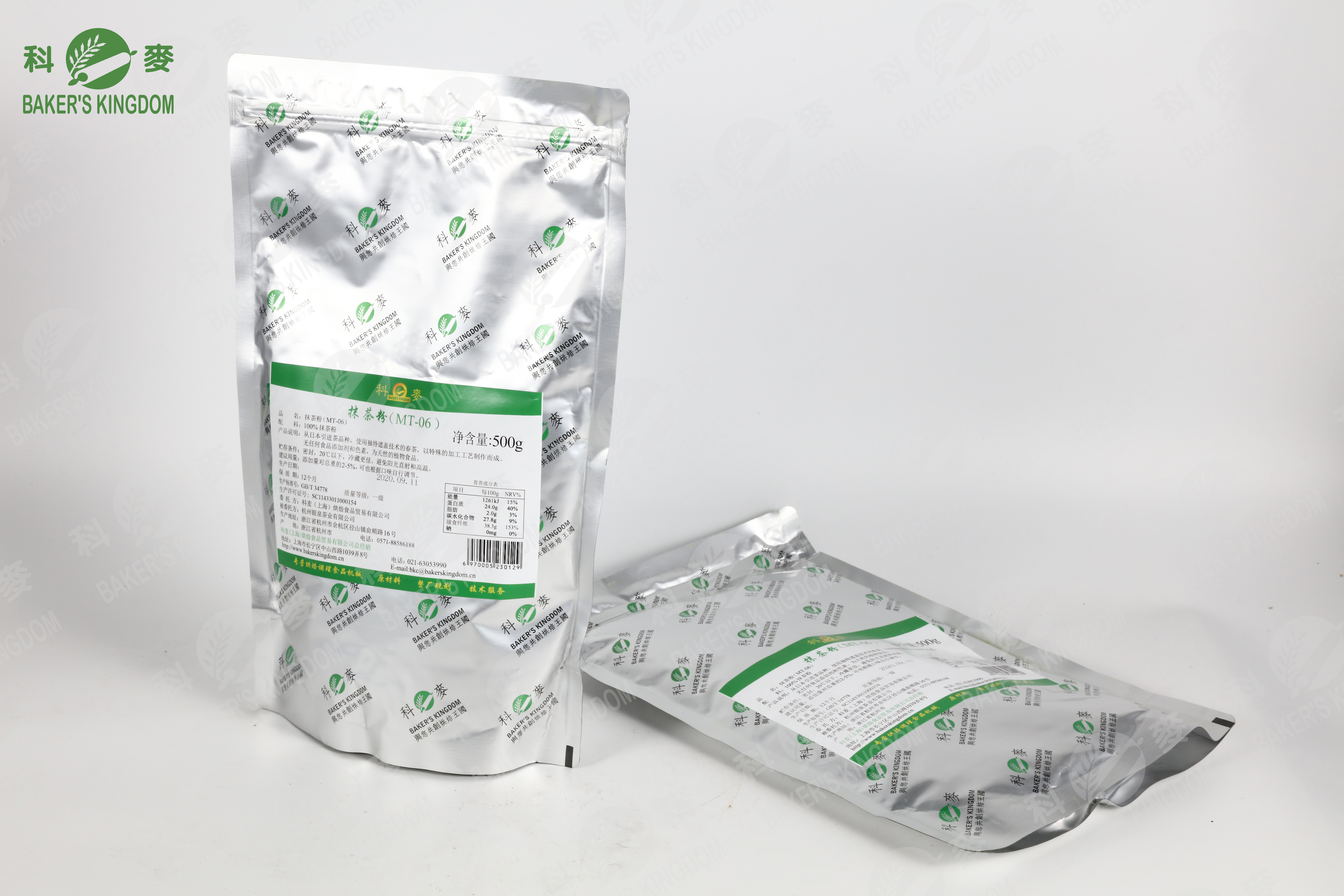
Request the exact product reference, ingredient declaration, suggested applications, and storage instructions. Establish whether the powder is pure tea or a formulated ingredient, since that affects dosage, flavor, and menu descriptions.
Baker’s Kingdom lists MT-06 Matcha Powder as a pure matcha product with cold-processed application examples. Its Bake Stable Matcha Powder page presents flavored variants for bakery and other applications. Confirm the current specification of the selected product before recipe approval.
Test each sample in an established base recipe using weighed quantities and a documented process. Compare tea intensity, sweetness, bitterness, aftertaste, texture, and appearance after cooling or chilling.
Grade names can help organize a supplier’s range, but the finished dessert determines suitability. For a chocolate-rich cookie, compare whether a higher-priced sample delivers a noticeable benefit. For a lightly flavored cream, check whether its aroma remains clear at the intended serving temperature.
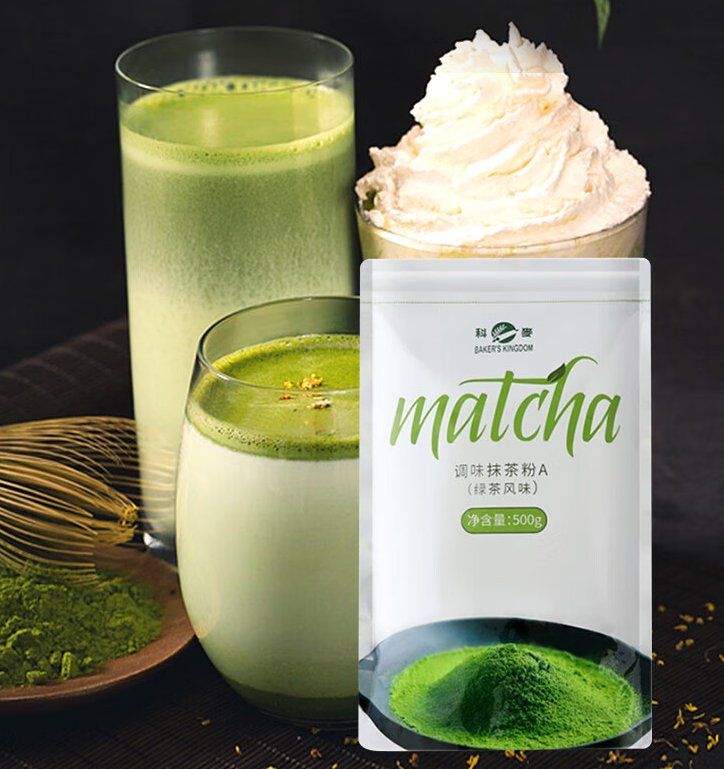
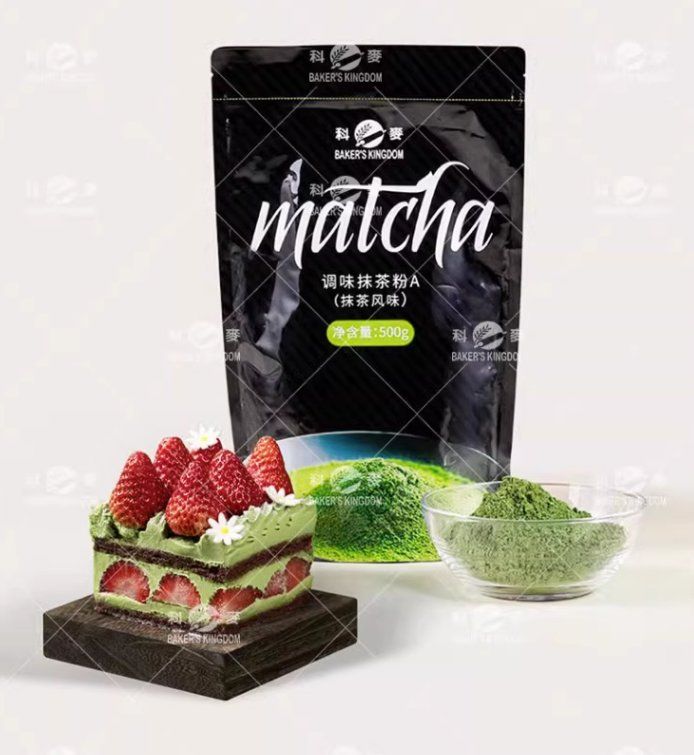
Choose a main pairing for each item. Matcha and white chocolate can suit a cookie. Cocoa and matcha cream can create contrast in a sandwich biscuit. Fruit can provide a separate accent in a chilled dessert.
Check additions such as nuts, dairy ingredients, and chocolate against allergen and ingredient requirements. For plant-based or gluten-free concepts, verify the complete recipe and production controls, then test the replacements for texture and storage behavior.
Use names that describe the dessert and its recognizable components, such as “Matcha White Chocolate Cookie” or “Matcha Cream Chocolate Tart.”
Use origin, organic, first-harvest, or milling claims only when the selected ingredient and supporting records justify them. Train service staff to explain the flavor, texture, and allergens using the approved recipe information.
Record ingredient weights, mixing order, batch size, equipment, portion weights, and the relevant baking or chilling process. Include the target yield and a reference photograph of the acceptable finished product.
Set a consistent dispersion method. Depending on the recipe, this may involve dry blending, screening, or preparing a slurry. Verify the method in the actual batch size. Check for lumps and uneven flavor before fixing the procedure.
Adding matcha can change dough or batter behavior. Compare the trial with a control and assess spread, volume, crumb, moisture, and eating quality. Adjust the formula based on the observed result.
Avoid applying one flour-replacement or added-liquid rule to every dessert. Cookies, sponge cakes, bread, and creams need different balances. If a premix is used, follow its instructions as the starting point and confirm how the matcha addition affects the result.
Check products in their intended packaging and display conditions. Record changes in color, flavor, texture, filling firmness, and moisture migration. Include transport or freeze–thaw steps when they form part of the operation.
Set food safety and holding requirements through the appropriate product assessment. Sensory checks help determine acceptable eating quality, while microbial safety needs its own evaluation. A short display trial alone cannot establish the shelf life of every recipe.
Follow the selected powder’s storage instructions. Use sealed containers, protect the ingredient from moisture and light, and record opening dates and lot numbers. If chilled storage is used, define how unopened packs are handled before opening to avoid condensation.
Keep weighing and mixing areas clean so powder does not discolor unrelated products. Schedule cleaning and allergen controls according to the complete recipes. Standard utensils and clear labels help staff repeat the process during busy service.
Start with the cost of every ingredient in the batch. Add packaging and track labor separately. Record saleable yield, rejects, and unsold portions so the commercial review reflects how the item performs in practice.
For a hypothetical example, a batch costs $24 in ingredients and $6 in packaging. If it produces 30 portions and all are sold, those costs equal $1 per portion. If only 24 portions are sold, the same $30 equals $1.25 per sold portion, before labor, overhead, taxes, and other costs.
This example shows why waste and sales volume matter when evaluating a menu item. Use your own figures when setting prices and comparing recipes.
Calculate matcha consumption from the weighed recipe and planned production quantity. For example, a hypothetical recipe using 120 g for 60 portions uses 2 g per portion. Producing 180 portions would require 360 g before measured handling losses.
Add the needs of other approved recipes, then compare the forecast with stock, pack size, supplier lead time, and remaining shelf life. Baker’s Kingdom lists 500 g packs for MT-06. Confirm available formats and delivery terms for the intended order.
Begin with a manageable selection and define the review period in advance. Track sales by item, production quantity, unsold stock, preparation time, and customer feedback.
Review area | Useful measure |
|---|---|
Demand | Portions sold by item and service period |
Waste | Unsold portions, rejects, and reasons |
Production | Preparation and finishing time per batch |
Consistency | Portion weight, yield, and appearance |
Customer response | Feedback on tea intensity, sweetness, and portion size |
Commercial result | Actual costs and contribution using the business’s accounting method |
Adjust batch sizes before adding more recipes. Expand with a seasonal variation or signature dessert once the core items meet the operation’s quality and cost requirements. Baker’s Kingdom’s bakery ingredient range can help teams identify premixes and fillings to evaluate alongside matcha.
A small selection is easier to train, forecast, and review. Choose items with different roles that fit existing equipment and preparation capacity. Add more when demand and production records support expansion.
It may work across several recipes, but test each application. A powder selected for a baked cookie may produce a different flavor or color in a lightly sweetened cream. Confirm composition and application suitability.
Set the dosage through weighed trials in the actual formula. Record whether the percentage is based on flour, total batter, or another reference. Use the approved grams per batch for forecasting and costing.
Start with a product the team already makes consistently, such as a cookie, loaf cake, or filled pastry. Assess the additional mixing, finishing, storage, and cleaning work before deciding.
Provide the proposed desserts, process, storage conditions, target market, ingredient constraints, trial quantity, and estimated usage. Include the flavor and appearance you want so relevant product samples can be discussed.
Planning a matcha dessert menu? Share your menu and production brief with Baker’s Kingdom to discuss matcha products, supporting ingredients, samples, and packaging options for your operation.


