
English


Views: 0 Author: Site Editor Publish Time: 2026-11-19 Origin: Site


Choosing matcha powder for commercial bakeries requires more than comparing price, grade names or the color of a sample. Buyers need an ingredient that performs in the intended recipe, meets the purchasing specification and arrives with appropriate documentation.
A cake batter, cookie dough and unbaked cream filling place different demands on the powder. Their processing conditions, sensory targets and food-safety controls also differ.
Start with a clear application brief. Then review the ingredient identity, evaluate representative samples and agree on quality and commercial terms. This approach gives procurement, development and quality teams a shared basis for approving a supplier.
Table of Contents
Tell the supplier where the powder will be used and what processing follows its addition.
For baked products, evaluate flavor, color, texture and handling through the actual oven process. For creams, coatings and other components receiving no subsequent heat treatment, assess suitability and controls for that intended use.
Baker’s Kingdom lists Bake-Stable Matcha Powder, with bakery applications including matcha chiffon cake and custard bread. Its separate MT-06 Matcha Powder listing describes pure matcha with cold-processed applications.
Use these descriptions to guide a sample discussion, then verify performance in your own product.
Request the complete ingredient declaration for the exact product code. Establish whether the ingredient is pure tea powder or a formulated product containing other components.
Check how its composition affects dosage, labeling, allergens and any intended product claims.
Ask for documented origin and processing information where these matter to the specification. A Japanese-style description does not establish Japanese origin. Baker’s Kingdom’s MT-06 page identifies Hangzhou, Zhejiang, as its place of origin.
“Culinary” and “ceremonial” labels do not establish a universal harvest season, particle size or heat tolerance.
Define the required sensory profile and application performance instead. Include acceptable tea intensity, bitterness, mouthfeel and finished-product appearance.
Request particle-size information with its measurement method. A mesh statement alone should not be treated as a complete particle-size distribution or converted automatically into a micron value.
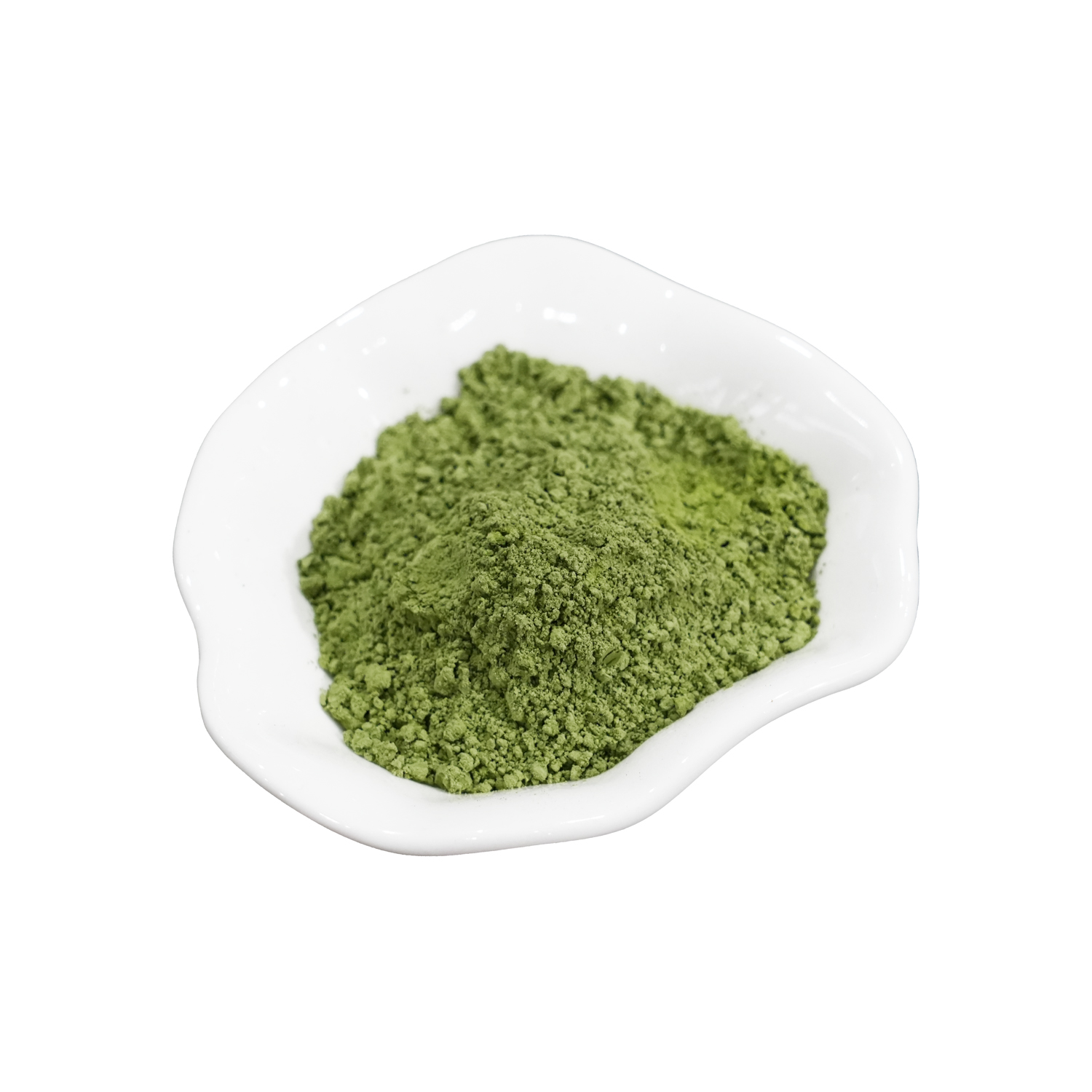
A useful purchasing specification separates ingredient identity, technical characteristics and safety requirements.
Agree on the test method and reporting basis wherever a numerical limit is used. This makes supplier results easier to interpret and compare.
Information to request | What the buyer should establish |
|---|---|
Product name and code | The exact ingredient covered by the approval |
Ingredient declaration | Pure powder or formulated product, including relevant components |
Origin and processing description | Support for sourcing requirements and claims |
Particle-size specification | Measurement method and suitability for the application |
Moisture specification | Method, limit and handling implications |
Microbiological requirements | Criteria appropriate to the ingredient and intended use |
Chemical contaminant information | Requirements for the destination market and product category |
Packaging and storage instructions | Conditions supporting the stated shelf life |
Lot coding and traceability | Connection between the delivered material and its records |
Moisture content and water activity describe different properties. Neither should be used interchangeably with the other.
A Certificate of Analysis should identify the material and relevant lot. Check the reported results, units, methods, acceptance limits and dates.
Where a result is reported as “not detected,” confirm the method’s reporting limit when relevant. For microbiological results, review the sampling quantity and method.
A generic example COA can help during supplier evaluation, but it does not describe the specific shipment. Agree which documents will accompany each delivery and how exceptions will be handled.
There is no single global set of contaminant limits or certification requirements covering every matcha ingredient and bakery application.
Have the quality or regulatory team establish the applicable destination-market requirements and customer specifications. Decide on audits, records review, testing and verification frequency according to the relevant risks and obligations.
If a certification is required, verify its validity, certified entity, site, product scope and coverage of the proposed ingredient. Do not infer certification from a general website claim.
Ask how the supplier connects incoming materials, processing records and finished-product lots.
Establish what information can be provided during a traceability exercise and who handles a complaint or withdrawal investigation.
Also agree how changes in origin, formulation, processing site or specification will be communicated. A replacement ingredient should receive appropriate review before entering an approved bakery formula.
Ask whether the sample represents routine production and record its batch number.
Provide enough application information for the supplier to shortlist relevant products. Include the recipe type, tea dosage, processing conditions and target result.
Retain a control ingredient where available. During the first comparison, keep the formula and process consistent so differences can be assessed meaningfully.
Powder appearance and aroma are useful preliminary observations. Final approval should include the actual bakery application.
Application | Important trial checks |
|---|---|
Cakes and sponges | Dispersion, batter handling, volume, crumb and cooled color |
Cookies and biscuits | Spread, texture, surface browning and tea aftertaste |
Bread and sweet dough | Dough handling, proofing behavior, volume and flavor |
Creams and mousses | Dispersion, mouthfeel, stability and intended-use suitability |
Chocolate-based coatings | Particle perception, moisture sensitivity and process compatibility |
Use the real inclusion level of chocolate, dairy, nuts or fillings. These ingredients can change how strongly the tea is perceived.
Record appearance before baking, after cooling and during storage. Compare the surface and interior separately.
Color changes can involve ingredient characteristics, recipe chemistry, heating and storage. Avoid assuming that every brown result proves the powder is unsuitable.
If the process needs adjustment, make a controlled change and record its effect on texture and flavor as well. A greener sample must still meet the complete product specification.
A successful sample establishes a starting point. It does not demonstrate consistency across future deliveries.
Where practical, compare additional lots and confirm performance on production equipment. Include normal batch loading, transfer, holding, depositing and cooling conditions.
Set acceptance criteria using successful trials. Retain approved reference information and define how incoming batches will be checked.
Ask about pack construction, seal integrity, light protection and moisture and oxygen barriers.
If the supplier offers nitrogen flushing, clarify its purpose and the available controls. Flushing changes the atmosphere inside the pack; it does not make the packaging material’s oxygen transmission rate zero.
Compare complete pack performance rather than judging it solely by the outer material name. Storage and transport conditions also affect suitability.
A large pack may reduce handling or purchasing cost, but repeated opening can expose the remaining powder to the bakery environment.
Compare pack size with daily usage, storage capacity and the supplier’s opened-product guidance. Baker’s Kingdom lists 500 g bags for its MT-06 product. Confirm the current format and any alternative options through an inquiry.
Agree on the required remaining shelf life at delivery. Use the product-specific storage instructions rather than assigning all bulk matcha the same shelf life.
Compare price using the dosage that achieves an approved result.
The following example is hypothetical and illustrates the calculation only. It is not a quotation or a claim about product potency.
Comparison item | Sample A | Sample B |
|---|---|---|
Illustrative price | US$30/kg | US$40/kg |
Approved trial dosage per batch | 0.20 kg | 0.12 kg |
Tea ingredient cost per batch | US$6.00 | US$4.80 |
Saleable units per batch | 1,000 | 1,000 |
Tea ingredient cost per unit | US$0.0060 | US$0.0048 |
Then include freight, duties where applicable, storage, handling losses, packaging and rejected finished products. A lower powder dosage is useful only if the complete bakery product still passes approval.
Request the minimum order quantity, sample terms, quotation validity, delivery basis and expected lead time.
Discuss forecast quantities, seasonal demand, replenishment arrangements and proposed substitutions. Ask which commitments the supplier can support rather than assuming domestic buffer stock, custom blending or guaranteed availability.
Send an RFQ containing the product application, destination market, specification, pack preference, trial quantity, expected usage and required delivery date.
Review the Baker’s Kingdom matcha range against that brief before selecting products for evaluation.
Choose by documented composition and performance in the intended recipe. Grade names alone cannot establish suitability. Compare samples for flavor, appearance, texture, processing behavior and cost at the approved dosage.
Check the product and lot identity, reported results, units, methods, limits and relevant dates. Confirm that the document addresses your agreed specification. Establish delivery-document requirements before placing the order.
Its value depends on the product, packaging system, storage conditions and turnover. Review barrier properties and sealing alongside any atmosphere control. Nitrogen flushing alone does not establish shelf life.
Possibly, but each application needs evaluation. A powder approved for baking should not automatically be approved for an unbaked component. Review sensory performance, handling and intended-use requirements separately.
Provide the bakery format, current dosage, mixing and heating conditions, target flavor and color, packaging and selling period. Include the target market, documentation requirements and expected purchasing volume.
To discuss ingredients for your bakery range, contact Baker’s Kingdom with your application brief and purchasing requirements. Request current specifications, relevant documentation and representative samples before approving a bulk order.


