
English


Views: 0 Author: Site Editor Publish Time: 2026-11-18 Origin: Site


Matcha powder clumping can begin in the package or during mixing. Soft powder agglomerates may develop during handling and transport. Moisture exposure can contribute to caking. When powder enters a liquid or thick batter unevenly, dry centers can remain inside wet lumps.
For bakeries, the first step is to identify when the problem appears. Check the powder before mixing, then examine the addition sequence and the recipe’s consistency. Sifting, dry blending, or preparing a separate dispersion can help, but the method needs to suit the dough, batter, cream, or coating.
Table of Contents
Fine matcha particles can collect into agglomerates. Static effects and movement during transport are recognized causes. Some soft lumps break apart readily during screening and may have little effect once the powder is properly dispersed.
Record the condition when the pack is opened. Compare the sample with an approved reference and check whether the lumps separate using the normal preparation method. Clumping alone provides limited information about grade, freshness, or suitability.
Check the package seal, storage history, opening date, and use of dry utensils. Look for evidence of moisture exposure or a change from the normal condition of that product.
If the powder is damp, unusually hard, discolored, or has an unexpected odor, set it aside for quality review. Breaking up the material does not resolve uncertainty about its condition. Keep the product code and lot number available when discussing the issue with the supplier.
Powder added too quickly can collect into masses that wet on the outside while remaining dry inside. The risk depends on the powder, addition rate, liquid, mixing action, and batch consistency.
Inspect a lump during a controlled trial to see whether it contains a dry center. Also check the bottom and sides of the vessel. A bowl can look uniform at the surface while unmixed material remains below the attachment.
Observation | First checks | Trial to consider |
|---|---|---|
Soft lumps in dry powder | Pack condition and normal sample appearance | Screen before weighing into the mix |
Hard or damp caking | Seal, storage, utensils, and lot history | Hold for quality review before use |
Lumps in a liquid base | Addition rate, agitation, and powder concentration | Prepare a separate dispersion |
Green pockets in dough | Dry distribution and mixing sequence | Preblend with a compatible dry ingredient |
Specks in cream | Powder condition and stage of addition | Compare screened powder with a compatible pre-dispersion |
Matcha contains leaf particles that remain in suspension. Although some constituents are soluble, a smooth-looking mixture depends on distributing the particles and breaking up unwanted agglomerates.
Adding more liquid or hotter liquid may change how the mixture behaves, but it does not guarantee that existing lumps will disappear. Control the preparation sequence and verify the result before adding the dispersion to the main batch.
A dense dough or finished cream can make it difficult to distribute a concentrated pocket of powder. Late additions are especially worth checking because the recipe may already have developed its structure or emulsion.
Fat-based recipes need their own approach. A water slurry may work in a formula that already contains an appropriate liquid stage. In chocolate or a low-water filling, that extra liquid can change viscosity, texture, or stability. Select a compatible dispersing medium and test it in the complete recipe.
A mixer may move a lump around without breaking it efficiently. Increasing the mixing time can also affect dough development, batter aeration, temperature, and cream structure.
If the batch needs extra mixing specifically to remove green pockets, investigate the preparation stage. Compare methods that address the powder before it enters the main mix, then check both dispersion and finished-product quality.
Use a clean, dry screen suitable for the ingredient and batch size. Screening can break up soft agglomerates and reveal material that needs investigation. Confirm the screen specification through a trial rather than applying one mesh size to every product.
Record the amount retained and the time required. If retention changes markedly between lots, review the powder condition and specification with the supplier. Avoid forcing suspicious hard material through the screen as a routine correction.
Blend the screened matcha with an appropriate dry ingredient already present in the recipe. This spreads the powder through a larger dry mass before liquids or fats are introduced.
For a small trial, compare the established process with a dry-preblend method while keeping the formula constant. Examine distribution before wet mixing and check several portions of the finished product. Record whether the change improves consistency without altering mixing time or texture.
For a recipe with a suitable water or milk phase, use a measured portion of that recipe liquid to disperse the matcha separately. Add it gradually and mix until the agreed smoothness is reached. Then incorporate it at the approved stage.
Start with a consistency the equipment can circulate effectively. A paste that is too stiff can be difficult to mix, while a very dilute mixture may require a different attachment or vessel. Determine the liquid quantity and temperature through application trials, and include that liquid in the total formula.
An immersion blender or powder-dispersion system may help with a suitable liquid base. Test the actual working volume, head position, and circulation. Check for air incorporation and temperature rise as well as visible lumps.
Keep higher-shear preparation separate from delicate aerated mixtures where practical. Once the dispersion is ready, use the validated incorporation method for the batter or cream. Equipment selection should follow the process result and scale.
Store and handle the ingredient according to its product-specific instructions. Use dry utensils, reseal packs promptly, and keep the weighing area away from steam and splashes.
For refrigerated or frozen packs, establish a procedure that lets the sealed package adjust before opening to reduce condensation risk. Choose working quantities that match the production schedule and record opening dates. Sifted powder also needs suitable protection while awaiting use.
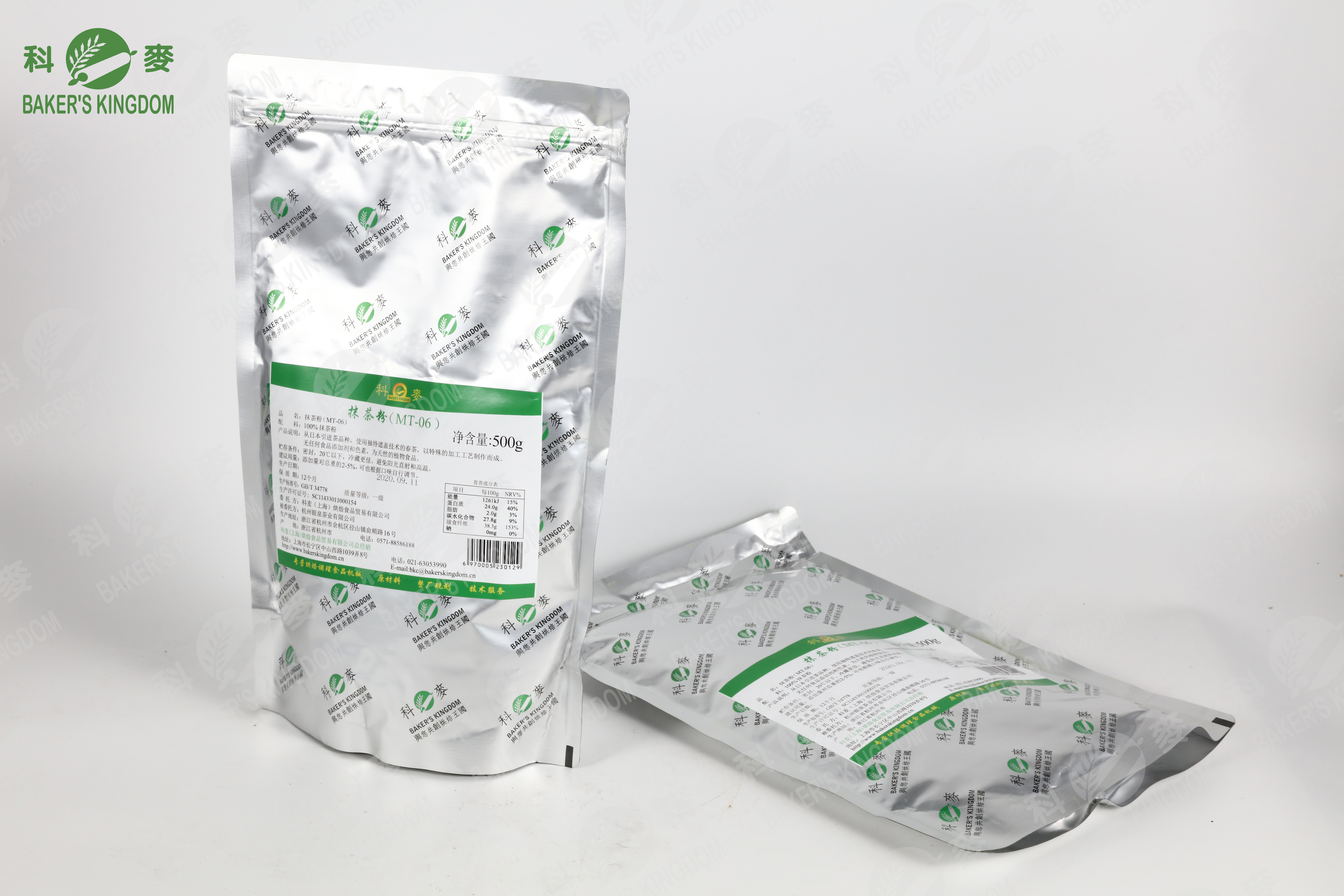
Baker’s Kingdom lists MT-06 Matcha Powder as a pure matcha product and describes ball milling in its process. Its Bake Stable Matcha Powder range includes flavored variants. Confirm the selected product’s composition and preparation guidance before comparing handling performance.
Ask how particle size is measured if it is part of the purchasing specification. A milling-method name or mesh description alone cannot establish how a powder will disperse in your recipe.
Trial record | What to document |
|---|---|
Ingredient | Product code, lot, pack condition, and opening date |
Powder preparation | Screen specification, retained material, or preblend method |
Dispersion | Medium, weights, temperature, equipment, and time |
Main mixing | Addition stage, batch size, attachment, and mixing sequence |
Product result | Lumps, color distribution, texture, volume, and flavor |
Repeatability | Results across repeat batches and relevant storage intervals |
Change one preparation variable at a time where practical. Retain photographs and an approved sample so staff can recognize the target result. If the method works on the bench, repeat it at production scale before updating the standard procedure.
For a recurring problem, share photographs of the unopened pack, powder, and affected mixture. Include the lot number, storage history, formula dosage, liquid or fat base, and mixing sequence.
State whether the issue appears in dry powder, during dispersion, or after the main mixing stage. This gives the supplier a clearer basis for reviewing the ingredient and discussing an application trial.
Soft agglomerates can form during normal handling. Hard caking, moisture, or a change in odor or appearance needs review. Assess the condition against the product specification and retained reference.
Check whether the powder was screened, how quickly the liquid was added, and whether the mixture circulates around the tool. Adjust the preparation in a trial and account for all liquid in the recipe.
Matcha contains suspended leaf particles, and hot water alone may leave agglomerates intact. Choose the liquid temperature for the product and recipe, then use an effective dispersion method.
Check the formula before adding liquid. Compare a screened powder or a compatible pre-dispersion at the appropriate stage. Confirm the effect on texture, emulsion, and holding conditions.
Contact the supplier when pack condition changes, hard caking appears, or repeat trials show a persistent difference between lots. Provide the product reference, lot number, photographs, and preparation details.
Troubleshooting matcha in a dough, batter, filling, or cream? Share your application details with Baker’s Kingdom, including the product code, lot, storage conditions, dosage, mixing sequence, and photographs of the clumps.


